
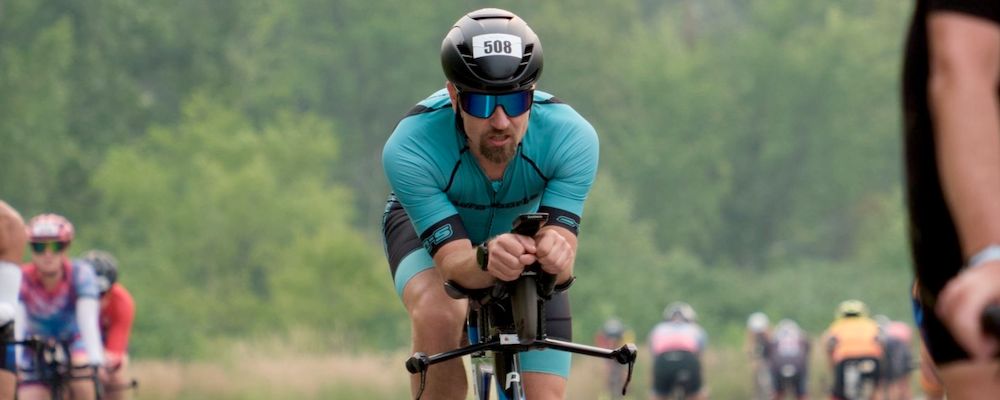
When Ironman announced their latest venue addition about a year ago, I hardly believed what I read – the iconic long distance triathlon event would come to Ottawa! How great is that: racing an Ironman in your own hometown, being able to train every day on and around the actual course and having so many friends participating and cheering for their first time! It did not surprise me that the race sold out in just a couple of weeks after it was announced.
Unlike all my previous five full Ironman races, this time around I did not have to travel. What a major convenience! The preparations leading up to race week were so much less stressful compared to last year in Cozumel and all the others before: not need to book flights and accommodation. No worries about lost luggage or a bike damaged in transit. No jetlag.
Training for an Ironman at home
What’s also different from previous attempts is that this time around my training had been rather unstructured. During the months leading up to Ironman Ottawa I did much less running than I’d usually do, and only swam 33 kilometers in total during the six months leading up to the race. My cycling game was going well, though, with dozens of long rides in zone 1 and 2, mostly due to our extensive bikepacking vacation earlier in the year.
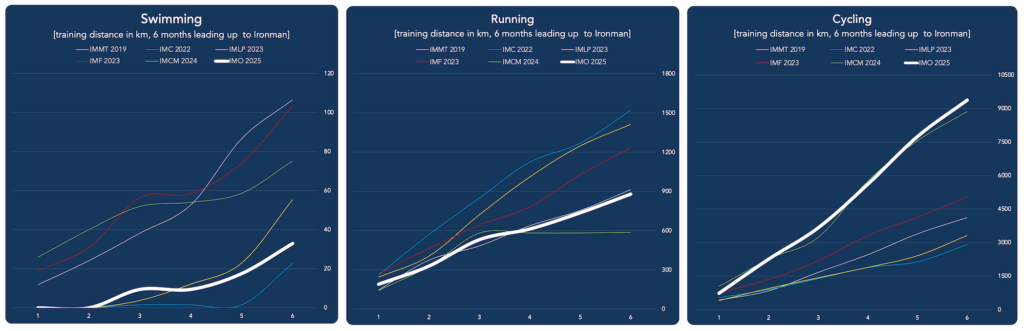
Generally speaking, I did not follow any structured training plan whatsoever. I tried to maintain my low level of swim experience and sustained a frequent running routine mostly to just get some running volume into my legs. No coach, no plan, no structure. After all, my main goal for Ironman Ottawa was to enjoy the race and make it to the finish line smiling. Both of which should be possible based on my long racing experience and good fitness.
Course recon
Biggest advantage of having a race in your home town: you can train on the actual course whenever you want (only limited by traffic on normal weekdays). The official course was altered a couple of times leading up to race week, but in general it’s been the same idea from the very beginning:
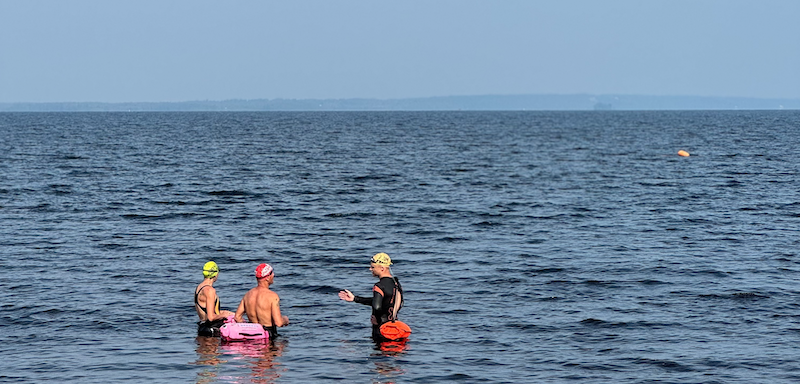
3.8km Swimming in Ottawa River at Britannia Bay – water quality is pretty ok here, the currents are not too bad, and usually the chop is manageable. It’s a bit out of the way and race day logistics would be a bit challenging, but that area has already proven to be feasible for mass swimming events, hosting the Bring on the Bay 3k annual swim competition.
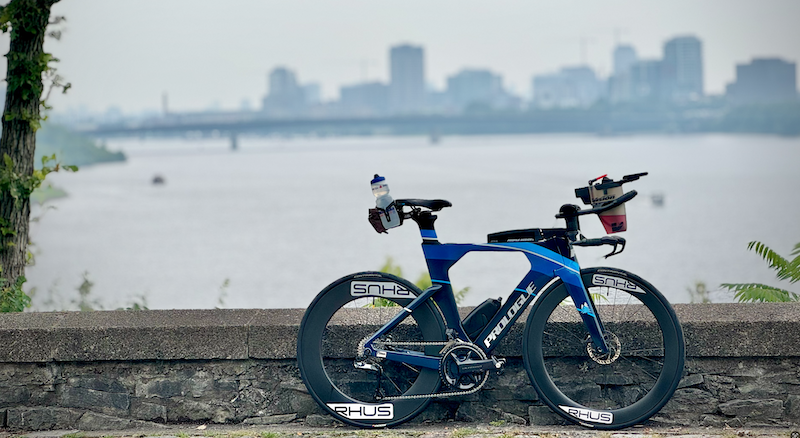
180km Cycling along most of the scenic parkways: Going into downtown via Kichi Zibi Mikan, then traveling south along Colonel By Drive, before an out and back on Sir George Étienne Cartier Parkway. All roads that I’ve ridden many times before (I even took a full video of the bike course late last year). Overall, a very flat course, with just some short climbs around Rockcliffe Park. Road conditions at times seemed questionable, but nothing too crazy if you’re prepared for it.
42.2km running around Parliament Hill, and then a double out-and-back along Queen Elizabeth Driveway, up to the Arboretum and west along the Experimental Farm. I’d consider the run course somewhat hilly – the steep path up Parliament Hill would have to be climbed twice, and the lookout at the Arboretum needed to be passed four times in total.
Race weekend is here
After five full Ironman races I’d consider myself an experienced long-distance triathlete. And yet, each time I see the Ironman village being built up and other athletes arriving in town creates an excitement leading up to all the way to race morning.
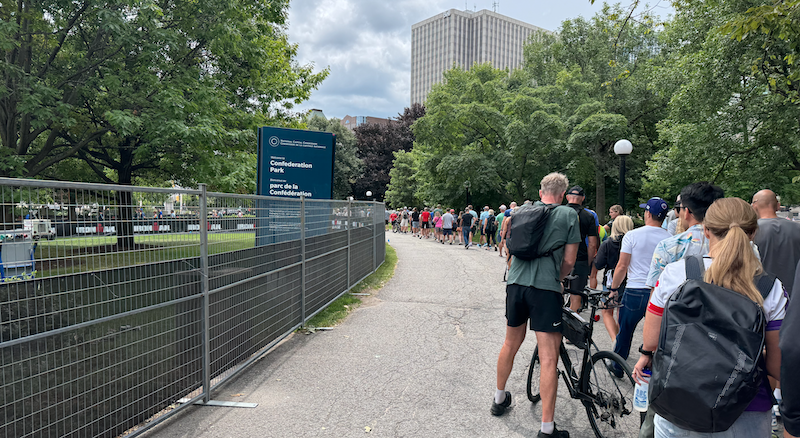
Athletes’ Village
Athlete registration was scheduled for 1pm on Thursday. I arrived early and clearly wasn’t the only one trying to beat the queue. Dozens, if not hundreds of folks were already lined up waiting for the weekend to officially begin.
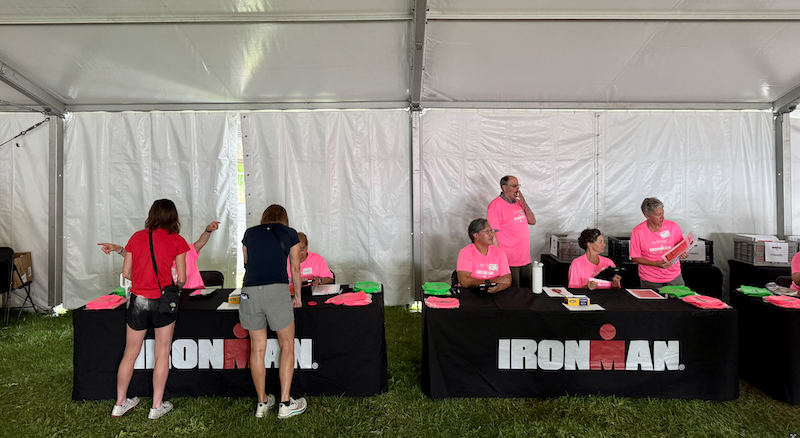
Registration itself went smoothly for me – as an AWA athlete I was allowed to skip the line and got my bib number, event swag, and timing chip quickly. The merchandise tent was packed while I was trying to limit my expenses; two water bottles, an event basecap, and one Ironman Ottawa outfit (shorts and jersey) was all I purchased this time. Now it was time to relax and enjoy the athlete briefing, hang out with friends in the Ironman village, take some pictures.
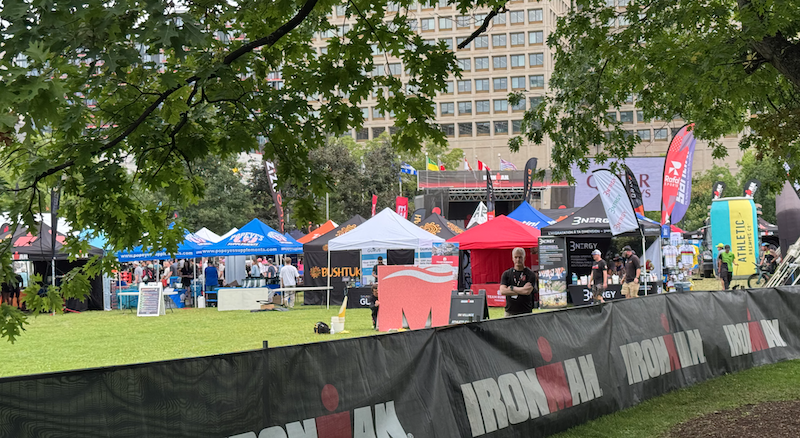
The whole scene was setup in downtown Ottawa, right across Parliament Hill in Confederation Park and Majors Hill Park. From T2 (second transition area) you got a great view of the Parliament buildings, the finish line chute was built up right next to the National Gallery. I really couldn’t wait to finally race that event on Sunday! During the mandatory 40 minutes athlete’s briefing we learned about some specifics of this course; nothing that hadn’t been covered in the athlete guide a couple weeks before except the introduction of a couple of no-passing zones on the bike portion. Being an Ottawa local this was easy information to incorporate my mental representation of the route.
Setting up transitions
Ironman Ottawa was set up with two transition zones – one at Britannia Bay in the west, where athletes would start and finish their swims before transitioning onto their bikes. And a second one in downtown, at Majors Hill Park, where the bike course would finish and the run section would start. Multi-transition setups can be quite daunting, especially if you’re new to triathlon. The day prior to race day you’d need to set up two different transitions in two areas quite far apart.
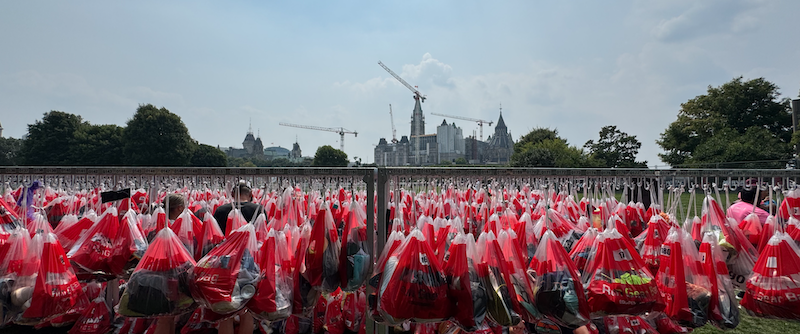
I first handled T2 – a red plastic bag was provided to put all your running needs in: shoes, socks, cap, your bib number, sun screen, and whatever else you’d need to run your marathon. On race day, you’d hand-over your bike to a volunteer, grab your red running bag, put your bike stuff in there (helmet, bike shoes, gloves, etc.), and take your running gear out.
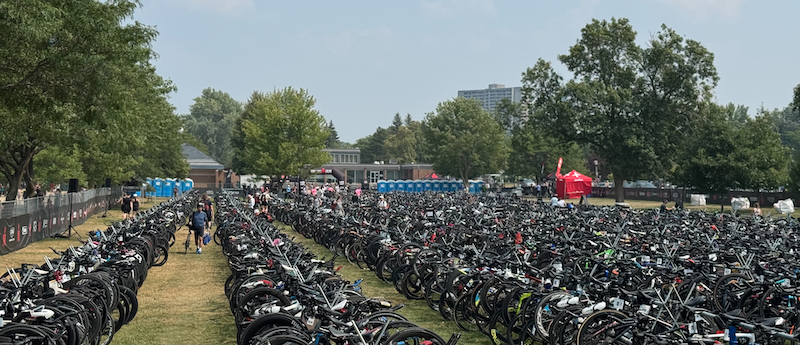
Once that was done, I cycled 15km to T1 where I had to leave my bike as well as the blue bike bag; containing everything I’d need for the bike section during the race, such as my helmet, bike socks, more sun screen, anti-chafing cream, bike shoes, gloves, sun glasses, etc. Thankfully, a friend of mine was able to take me back to downtown in their car. There were also shuttles provided by Ironman that would take athletes back from T1 to Ironman village in Ottawa.
The Race
My alarm was set to 3am on Sunday, but I was hardly sleeping anyway. At 2:50am I decided to get out of bed, more or less ready to start a long day. Never have I really felt ready to race an Ironman, but with more experience comes more confidence. While I knew that my training wasn’t perfect, I also knew that I’ve completed that same challenge many times before. I was not too nervous.
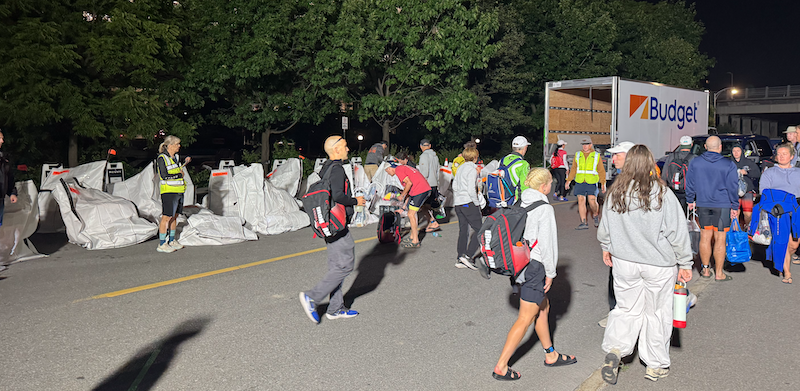
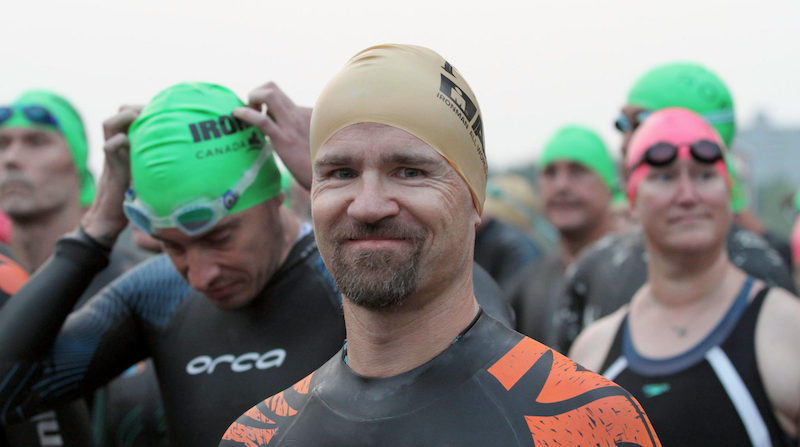
Breakfast did not at all deviate from every other day, other than being four hours early: two white English muffins with butter and honey, a cup of instant coffee with milk, and a chocolate chip cookie, followed by a banana late through the morning routine. Everything I needed was already packed meticulously last evening, and I was ready to make my way to Confederation Park just shortly after 4am, using my commuter bike; only to jump on a shuttle bus that would bring us to the swim start.The atmosphere at Britannia Bay was calm, but electric. It was still dark outside, while athletes were busy with their final preparations: a last check of tire pressure on their bicycles, filling water bottles, getting into their wetsuits after the race officials confirmed the swim would be wetsuit-legal. Nervosity was in the air when everyone started to line up for the race start – at 6am it was officially on!
Swim: 3.8km in 1h19m
It’s become common for Ironman to organize rolling swim starts: every couple of seconds four athletes are released into the water, making sure that there’s not too much panic going on. Your individual time only starts once you cross the timing mat at the beach. I seeded myself just behind the 1h20m sign, knowing that I wasn’t the strongest swimmer but can hold a 2:05min/100m pace pretty consistently.
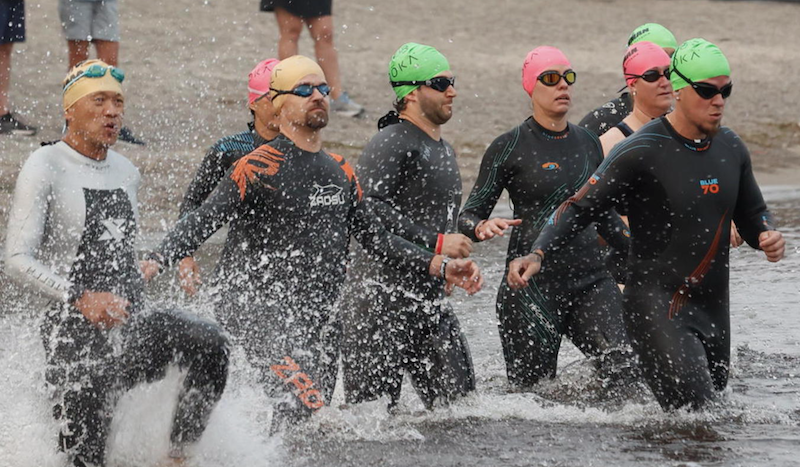
In some of my previous races I had to deal with mild panic attacks at the beginning of the swim portion – unable to find a rhythm, heavy breathing, high heart rate, and problems keeping my head under water. Not this time. Right from the beginning I stayed calm, found my stroke, saw the buoys in front of me, and just kept going. It was not too busy in the water, and not too choppy either. This experience so early during the swim gave me confidence that the next hour would be manageable. After all, the swim was my most feared discipline!
After a couple hundred meters there was the first turn, 90º towards the west, technically into the current. We were now pretty far out onto Ottawa River, but the waves were still pretty easy to deal with. Occasionally another athlete would cross my line, or pass me, or hit me on the head, but nothing I hadn’t experienced before. Only that somehow someone else’s hand managed to pause my Garmin watch recording, which in both cases I was quickly able to continue.
About halfway into the swim, something very surreal happened. While sighting for the next buoy, I suddenly saw people walking in the distance, but in the water. I looked again after my next breath, and just got the same picture: people in wetsuits apparently walking on water. What was going on? Shouldn’t we be in the middle of Ottawa River? Did everyone go the wrong way? This was the weirdest swimming experience so far… it turned out that the course would go over a very shallow sections and some athletes decided to walk, instead of swim. Some areas seemed to be only a couple of inches deep. Luckily, the line I chose had about half a meter of clearance to the bottom and I could just front crawl my way through the maybe 50m long sandbank.
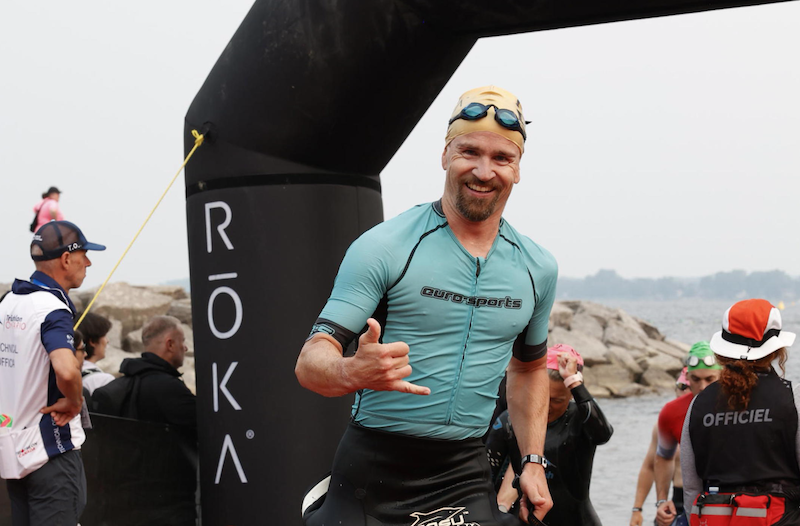
Soon enough two more turn buoys guided back into an eastward direction. The sun was getting above the horizon, and thanks to this weekend’s bad air quality it was hazy enough to not be blinded.When I finally returned to Britannia Beach, I could not tell how fast I actually was. Joy and relieve was all I felt when exiting the water, getting my wetsuit stripped of by helpful volunteers, and entering the change tents after picking up the red bike bag in T1.
Bike: 180km in 5h3m
After a short transition of under seven minutes I was ready to go on my bike. My bottles were filled with Gatorade, and I took some good sips as soon as I started. The course was extremely familiar to me, and I knew exactly what was coming, feeling excited about the next couple of hours.
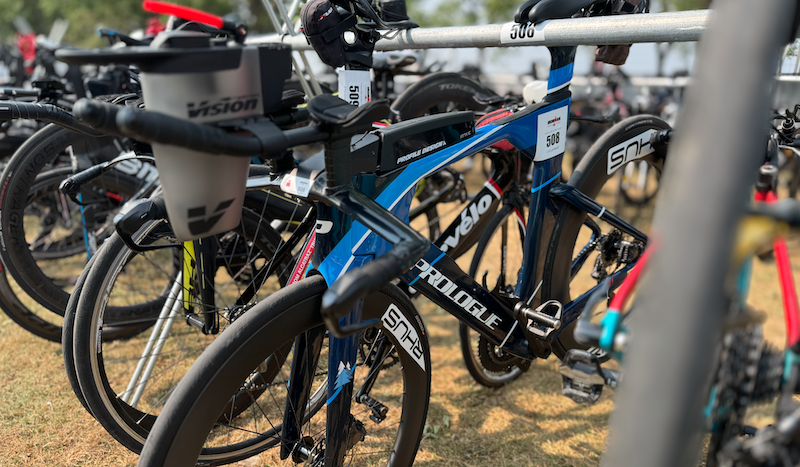
Cycling has become my strongest discipline over the past couple of years. In the past seven months alone, I already cycled more than 10,000 kilometers, spending a lot of time in the saddle on long rides, long climbs, and bikepacking adventures. My Prologue Aviation 4.0 felt very comfortable and five hours in aero position shouldn’t be too much of problem for me. All I needed to be careful about was fueling, hydration, and keeping my power output at a manageable level.
Overall, I wanted to stay just below 200W in average. On a flat course like here in Ottawa that was pretty easy to maintain. The wind was coming straight from the west, which would give a good push over the first couple of kilometers. Time to eat the first Clif bar, drink some more Gatorade, and start sipping on my highly concentrated Tailwind mix (450 carbs diluted in 700ml of water).
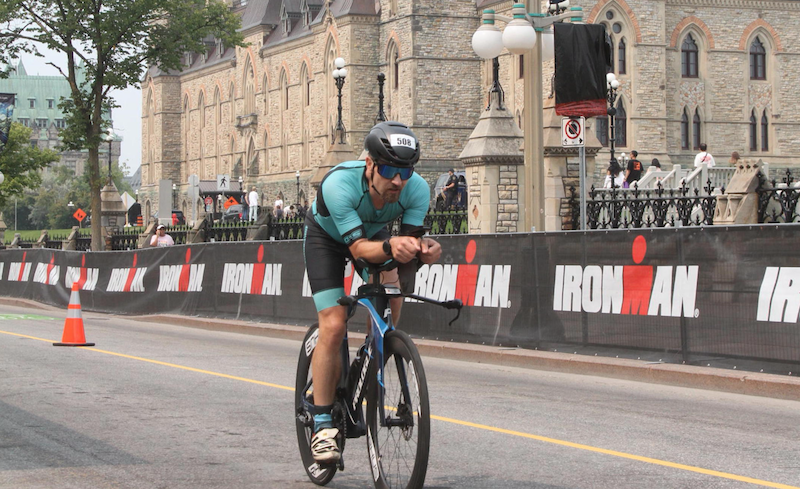
The course went straight to Centretown, passed the parliament buildings, before turning right onto Colonel By Drive, following the Rideau Canal until a turnaround point. The asphalt was getting much better in that section, and with spectators distributed across the whole part time was going by really quickly. At each water station I made sure to grab a fresh bottle of water, quickly refill my front hydration system and disposing the empty bottle before the end of the station. This gave me roughly 500 milliliters every 25km in addition to the 1500ml I had with me on the bike from the get-go. I also grabbed a total of two Maurten 160 gels which helped me power through.
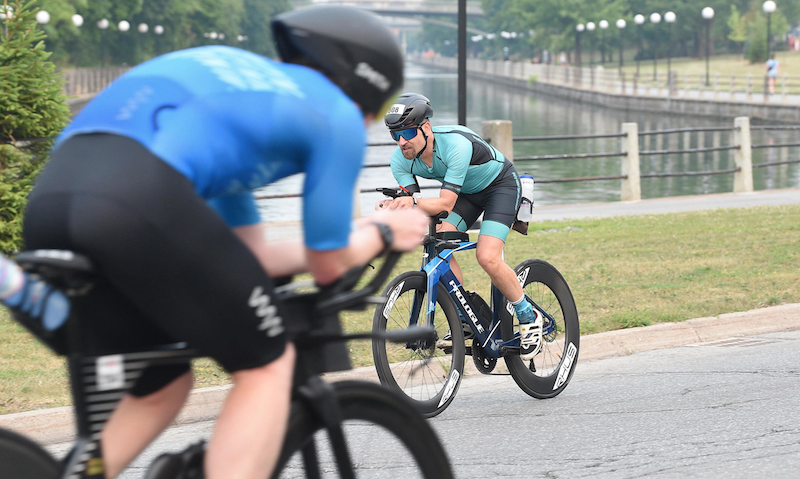
While most of the streets were not ideal (to my European standards), there were two sections that I’d consider rather bad: a shorter section on the Quebec side, and a couple kilometers later on Kichi Zibi Mikan going west, where the potholes and cracks were just making the ride pretty uncomfortable. Plenty of lost water bottles on each side of the street were tell-tales of other athlete’s unawareness, or unpreparedness, or both.
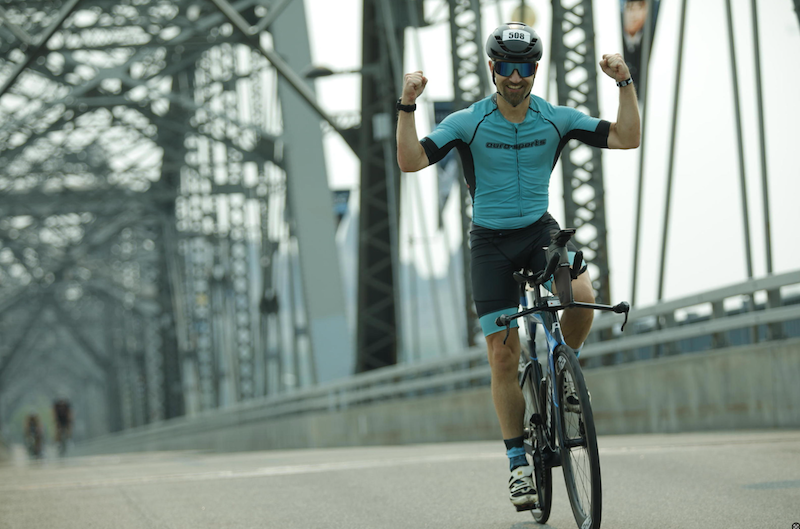
About halfway through I figured that I was on a sub 5 hours trajectory, much faster than on any of my previous races. The wind got stronger though, and coming back from the eastern turnaround became more challenging on each of the three loops. I kept pacing myself by power numbers rather than speed, and ultimately slowed down a bit on the second half of the course. After all I was able to push through. My neck and back started hurting a bit, but not enough to leave my aero position. I was stunned realizing that I’d finish the 180 kilometers in just over five hours – more than 20 minutes faster than my PB in Florida two years ago!
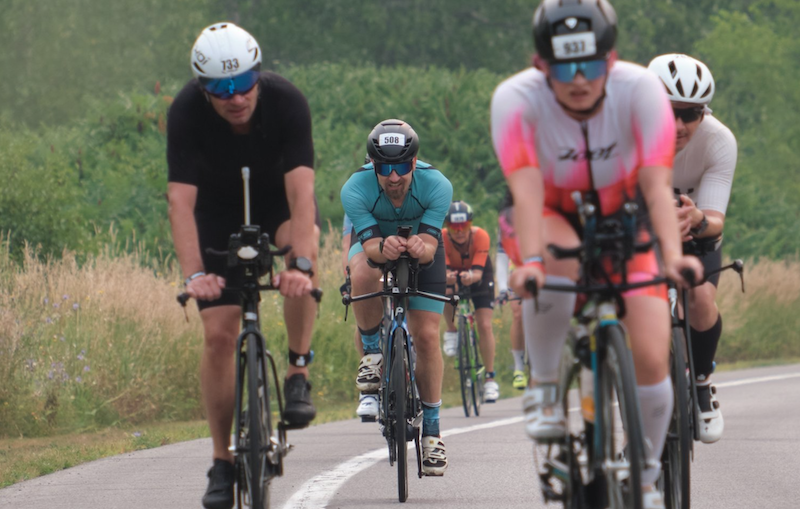
Run: 42.2km in 3h53m
An Ironman finish for age groupers is often being decided on the run section. If you biked hard, you’re likely to bonk early. And I got a lot of experience with bonking during the marathon – sometimes even right out the gate from T2. I’ve had stomach cramps in multiple races before, or just a total lack of energy. Today felt different. Another rather short transition (under 7 minutes) didn’t give me much time to fully recover, but running did not feel too awkward. My stomach felt fine, so did my legs. Without checking my pace, I just ran by what I thought was sustainable.
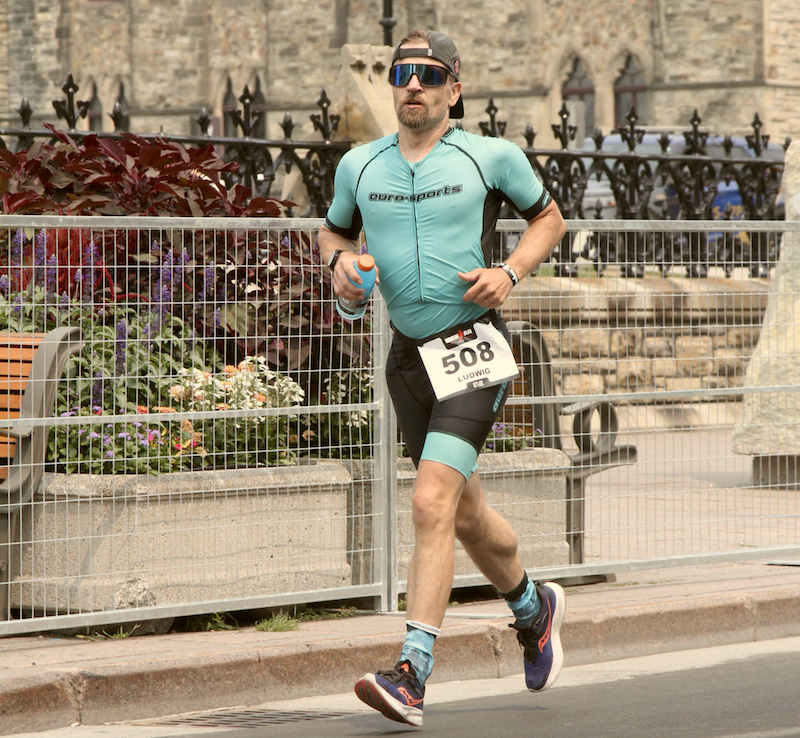
It turned out that I kept my power on the bike well under control. The nutrition game over the past five hours also seemed to have worked out pretty well. When I got my first kilometer pace notification I was surprised to be running well under 5 minutes per kilometer, while keeping my heart rate at around 150bpm. Great start!
The course led us around the Parliament buildings, down to Ottawa River, and then steep up along the locks to Rideau Canal. Brutal climb, but not too long, and with so many spectators cheering it felt much easier than during my training runs. I was just happy about being able to run at all, without discomfort, and in a great mood. Sure, at some point this would likely change, but for now everything was perfect.
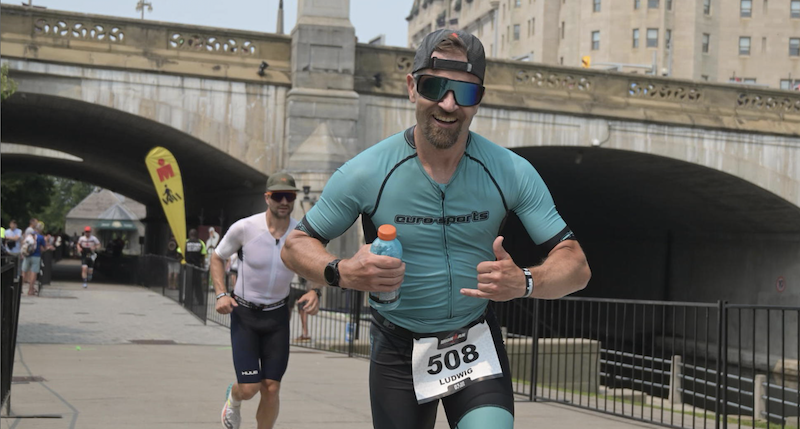
I heard so many people shouting my name and saw so many known faces along the course that time went by surprisingly quickly. At each water station I slowed down to take in at least one cup of electrolytes or water and one or two cups of coke. That was pretty much all I consumed throughout the whole course. Less than ideal, but it kept me going and while running became harder and harder with every kilometer, at no point did I feel like hitting the wall.
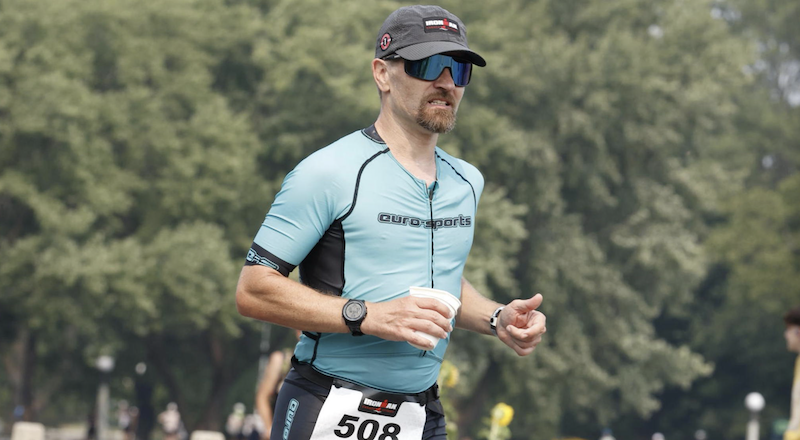
Tara and some friends established a cheering station on Dow’s Lake, just around the corner where we live, and passing them four times gave me tons of energy. I also saw plenty of friends who were racing themselves and somehow each one looked worse than I actually felt myself. What was happening today? At the halfway point of the run I started calculating my finish time potential. I had no idea how long my swim was, but my goal of beating 12 hours was in reach, even 11 hours was possible if nothing major would happen on the second half marathon!
The run course design was well chosen. We had Queen Elisabeth Drive in its whole width for a long out-and-back, which allowed to run towards oncoming runners without having to pay too much attention to narrow roads. That time of the day did not provide much shade, and the sun was burning. But I was used to that, and actually prefer hot temperatures on race day.
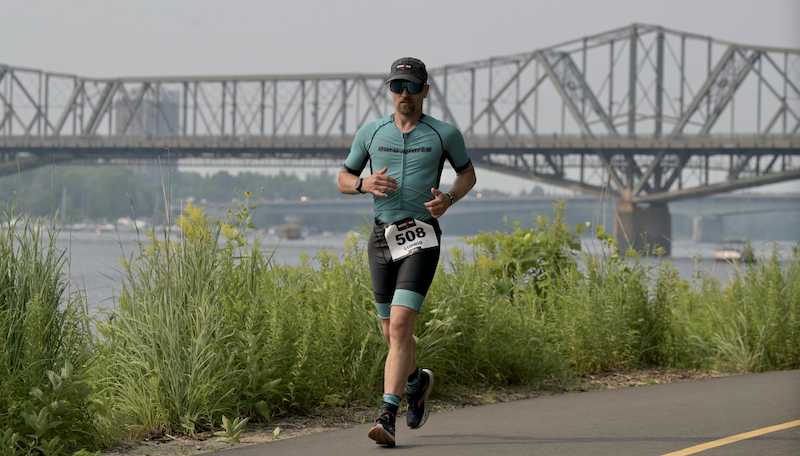
Alexandria bridge in the background
I saw my cheering quad the last time with eight more kilometers to go and I knew I was going to make it in a personal best time. My back hurt, my quads, too, but overall, my body was still functioning well. I counted down the kilometers, knowing that there was one more hill to climb. Those last 2000 meters were extremely daunting… a 10-15% incline up parliament hill had me walking this section, and for a moment I suddenly felt like passing out. Some more fluids at the final water station and then just one step after another.
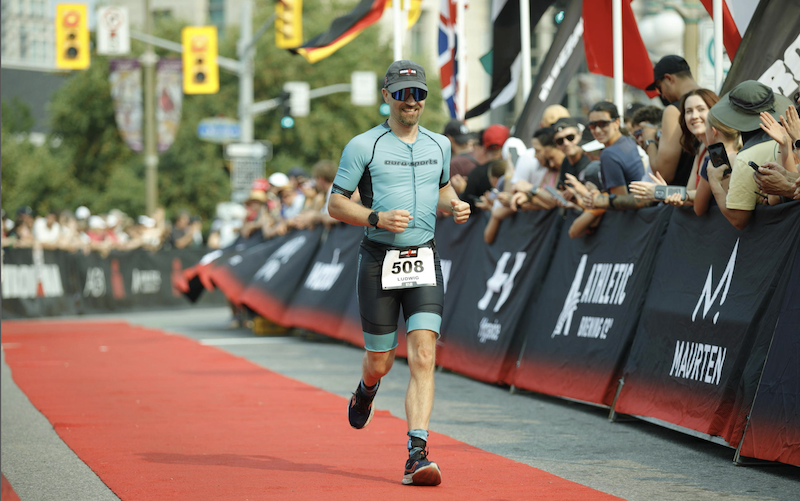
When I finally reached Wellington Road and started running again next to Parliament, I already heard the finish line noise. Turning onto Sussex Road, the last couple hundred meters. What a feeling. Completing an Ironman in my hometown of Ottawa, finishing it in a time I was not even dreaming of… this was my sixth Ironman, but none of the ones before felt as emotional as that one, it really felt special. I took it all in, and those last 50 meters along the finish line chute were just phenomenal. You are an Ironman!
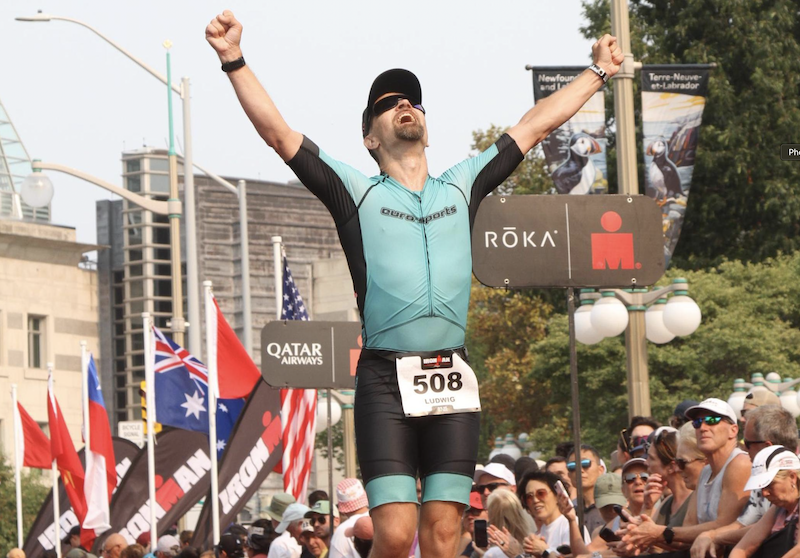
Finish: 226km in 10h28m
When I looked at my finish time above me, I couldn’t believe my eyes: just under ten and a half hours! My last Ironman in Cozumel took me two hours longer, and even my personal best in Penticton in 2018 was 90 minutes longer than the time in Ottawa. Everything seemed to be coming together. The swim was just about the same as always; but I perfectly timed and paced myself on the bike, and finally managed to not bonk on the marathon. I did not train in a structured way, did not have a coach, and ran less then usual. The biggest part of my training I spent on my bicycle on long but relatively easy rides. Seems like that’s the trick!
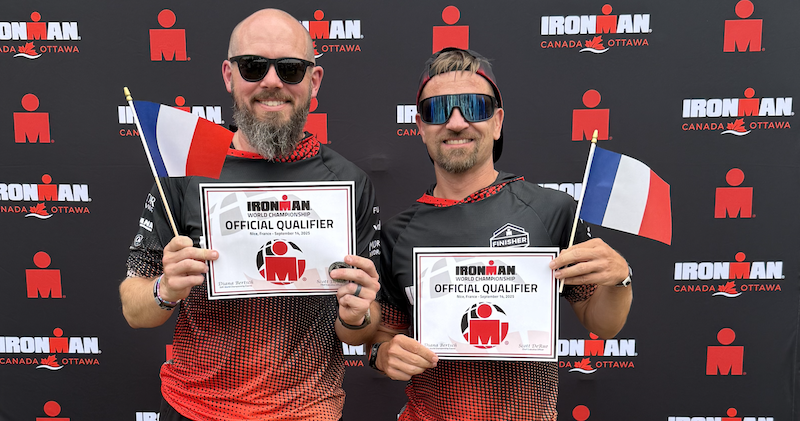
I ended up 14th place (out of 146) in my age group, which turned out to be enough to be offered an entry into this year’s Ironman World Championship in Nice, France – guess I’ll travel to Europe again, in just six weeks!
Stats
Here’s some stats of this race (in relation to my previous personal best at Ironman Canada – Penticton):
Individual times for each discipline:
Swimming 3.8km: 1h19m (+/-0min) | Transition 1: 7min (-2min) | Cycling 180km: 5h3min (-48min) | Transition 2: 6.5min (-3.5min) | Running 42.2km: 3h53min (-33min) | Total time for 226km: 10h28min (-86min)
Nutrition strategy and consumption:
- Breakfast at 3:45am: 2 English muffins with butter and honey, 1 coffee, 1 chocolate chip cookie (970 calories, 130g carbs, 500ml fluids)
- Pre-race: 1 banana, 1 Gatorade (250 calories, 60g carbs, 600ml fluids)
- On the bike: 1 Clif Nut Butter bar, 2 Gatorades, 10 scoops of Tailwind, 2 Maurten 160, gels, 1 water bottle at each water station (1850 calories, 420g carbs, 4500ml fluids)
- On the run: 1 Gatorade, 1-2 small cups of coke at each waterstation, 1 cup of Mortal nutrition on each waterstation, occasionally water (950 calories, 240 carbs, 2700ml fluids)
- Post race: ice cream, fries, 15g of chips, small beaver tail, jellybeans, 2 cokes, water (1200 calories, 190g carbs, 1500ml fluids)
- RACE DAY TOTAL: 5250 calories, 1050g carbs, 9800ml fluids

Aftermath – what was great and what could be improved?
Ironman Ottawa has been one of my favourite races so far. Here is what made it special:
- All roads closed to traffic, on both the bike and run course
- Very scenic course through a downtown of a large city. That made it easy for spectators to cheer; even along the bike course there were people on each section. That is pretty unique!
- Huge number of local athletes – 1900 from Canada, and more than 1000 from Ottawa alone.
- It’s a fast course – if you don’t like hills or technically challenging courses, Ottawa is for you.
Some things to consider before you register:
- Road conditions in some sections were questionable. Nothing completely out of the ordinary if you’re used to Canadian roads, but for folks traveling from Europe this may come as a surprise.
- Air quality: Summer in Canada seems to get more and more affected by wild fires. Races have been cancelled in the past; on race day, the air was hazy and some athletes decided to not start because of it.
- The water temperature was just below wetsuit legal on race morning, but well above wetsuit legal the days prior to race day.
- Ottawa can be very hot, humid, and windy in August. Make sure you prepare for those conditions.
I’m registered for my 1st Ironman for Ottawa 2026 and this is by far the best page I’ve found to help me mentally prepare for the race. Great insight not only on the course but also the part I’m most nervous about, nutrition.
Thanks for taking the time to let us know how your race went.
Good luck in 2026! You chose a great race for your first Ironman!
Yeah this debrief is absolutely fantastic! I’m doing the 2026 Ottawa Ironman and this is hands down the most helpful thing I have ever read. Thank you so much for this!
All the best for this year’s race! You’ll love the venue 🙂