For the third consecutive year, I travelled to Mexico to compete in Ironman Cozumel. Escaping Ottawa’s cold November weather for a week in the Caribbean has become somewhat of a tradition, and I certainly don’t mind spending some time in the sunshine before the Canadian winter arrives.
Having raced here in 2024 and 2025, I knew what to expect. Cozumel looks like a fast course on paper, with practically no elevation on either the bike or run, but strong winds, high temperatures, and relentless humidity can make it surprisingly difficult. Both of my previous races here had been quite challenging, so while I was hoping to improve on last year’s performance, I wasn’t expecting a particularly fast result.
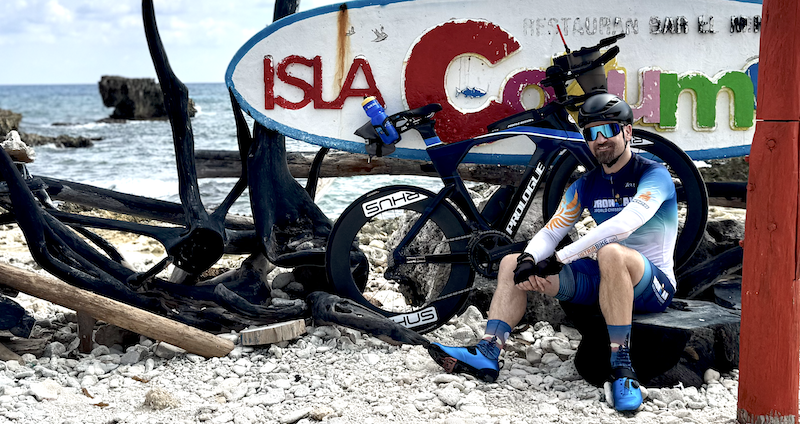
My training had been going well, though. With almost 20,000 kilometers of cycling this year, including the Three Peaks Bike Race across Europe, my endurance was probably better than ever. Running had also been going well, with some strong training months and a recent half-marathon personal best. Even swimming, traditionally my (and probably most triathletes’) weakest discipline, had received more attention than usual during the weeks leading up to the race. Maybe for the first time I actually did feel ready!
In this post: Travelling to Cozumel | Getting ready for the race | It’s race day! | A new personal best | Aftermath | Nutrition strategy
Travelling to Cozumel
To allow myself to acclimate, I travelled to Mexico six days prior to the event. Getting to Cozumel with a bicycle and all the equipment needed for an Ironman is always a bit of an adventure. This time I booked a direct flight from Ottawa to Cancun (on the mainland) with Porter Airlines, to avoid the stress of having my bike bag being handled multiple times during connecting flights. Unfortunately, the airline changed its schedule about a month before departure, pushing my arrival to 6:45pm. With the last ferry from Playa del Carmen to Cozumel departing at 10pm, that didn’t leave much room for delays.
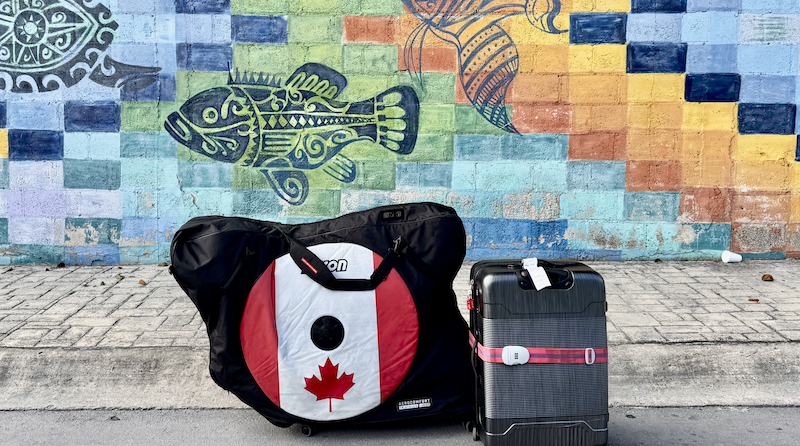
Fortunately, immigration went surprisingly quickly, despite a long line. Luggage pickup was a different story. The baggage hall was incredibly busy, and while my bicycle appeared after about 30 minutes, my suitcase took another twenty. By 8pm I was finally sitting in my pre-booked shuttle, heading toward Playa del Carmen (about an hour drive). No traffic, and for the first time that evening I could relax a little.
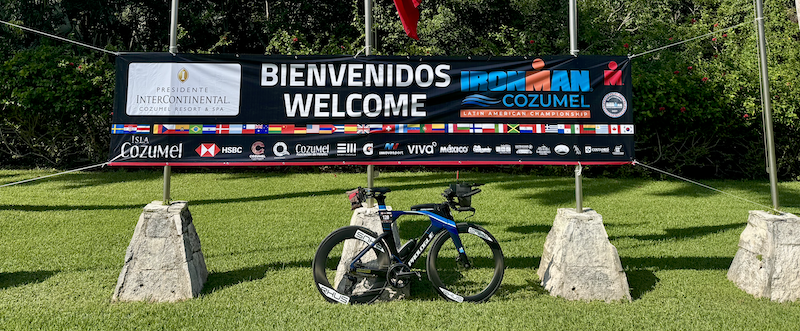
I eventually made it to the ferry terminal by shortly after 9pm. After a dark crossing to Cozumel, I still had to drag my bike bag and suitcase for about two kilometers to the hotel, which wasn’t particularly enjoyable on the island’s uneven sidewalks; taxi would have been an option but I tend to always go for the human powered way. Once I arrived at my all-inclusive resort, I discovered that everything is only inclusive until 10:30, and I had to go bed hungry; not exactly how I had imagined starting my carb-loading week.
Getting ready for the race
Waking up in the Caribbean the next morning (Tuesday) was quite the treat! Sunshine, palm trees, warm ocean water, and no sign of the approaching Canadian winter. The one thing I had almost forgotten about was the humidity. With levels above 80%, my first 10km run through Cozumel’s neighborhoods was brutal. Despite running at what would normally be an easy zone 2 pace, my heart rate was quickly reaching zone 4. I was sweating excessively, and the thought of running an entire marathon in these conditions wasn’t particularly appealing.
My first ocean swim on Wednesday wasn’t much more encouraging. The water was beautifully clear and incredibly warm at around 28°C, but the current was strong and pushing in exactly the wrong direction. Interestingly, I had experienced similar conditions before my previous two Cozumel races, so hopefully things would change by Sunday (or just be different at the actual swim start).
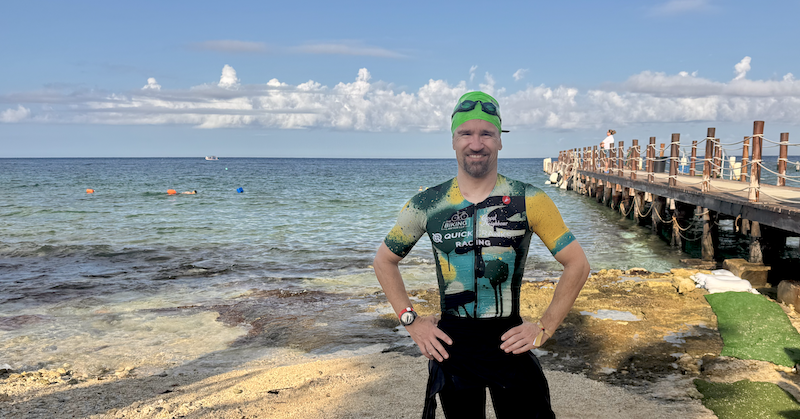
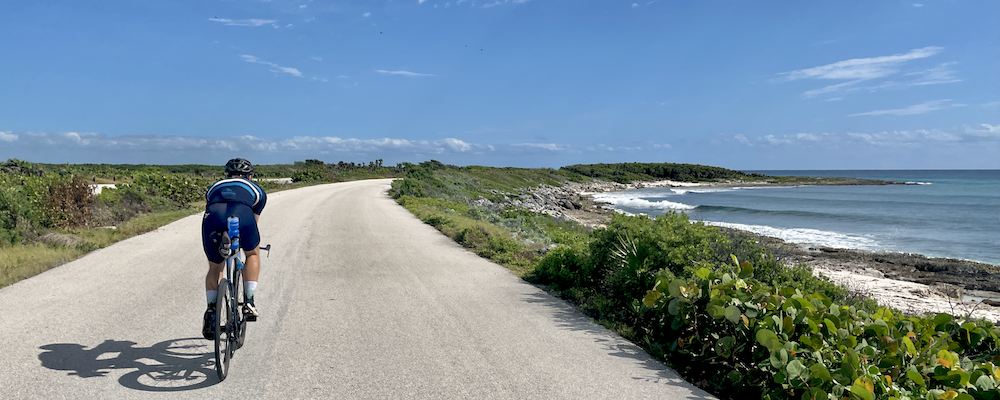
I also took my bike out for a full 65km reconnaissance loop around the island. With its long stretches along beaches, tropical vegetation, and mostly smooth asphalt on relatively quiet roads, the course is a real gem. Even the notorious headwind on the eastern side wasn’t particularly strong that day. Throughout the week I continued swimming, cycling, and running, and especially walking perhaps a little more than you should before a long endurance event. But it’s difficult not to be active in such a picturesque place! My second 10km run felt considerably better than the first, which was encouraging.
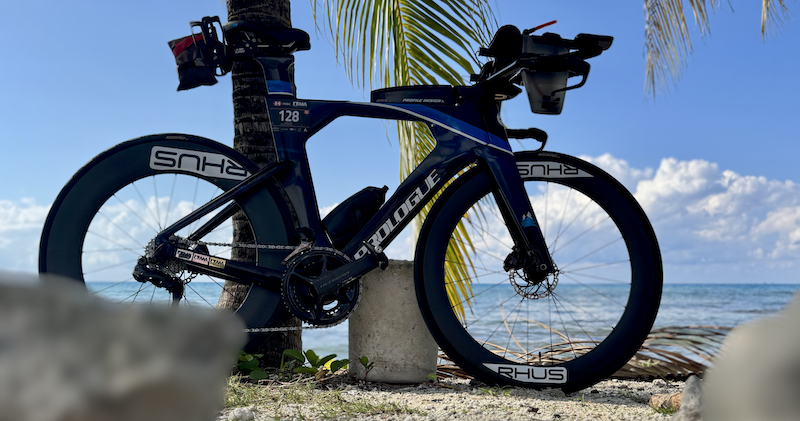
Thursday was athlete registration day. After participating in so many Ironman events, the procedure has become increasingly routine. This year everything was considerably better organized than in 2025, with no waiting lines and a quick check-in process. I even managed to leave the merchandise store without buying anything!
On Friday I joined about 40 other athletes for a group swim at Stingray Beach, followed by another easy 40km ride. The remaining time was spent organizing equipment and figuring out my nutrition strategy (yes, I usually do that just a couple days before the event…). My original plan had been to wear a hydration vest during the marathon to have constant access to my Tailwind mixture, but given the expected heat and humidity, I decided against it. I wanted as much uncovered skin as possible to allow for evaporative cooling, so I’d rely on the on-course nutrition instead.
(You’ll find a summary of my nutrition at the end of this post)
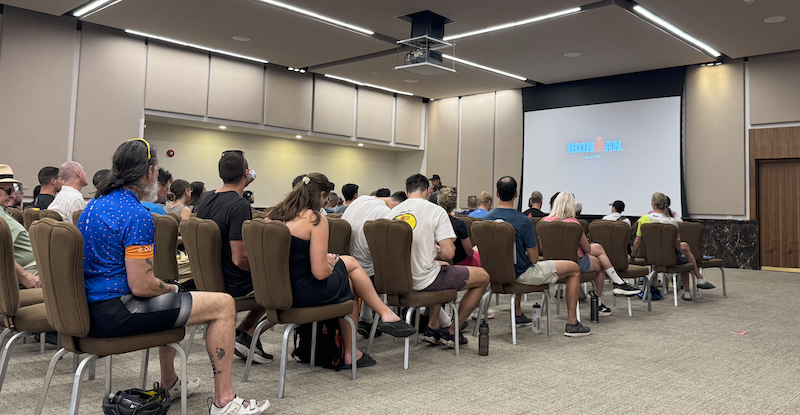
Saturday was dedicated to preparing my transition bags and dropping off my bicycle and running equipment. Cozumel features a point-to-point swim and two separate transition areas, making the logistics somewhat more complicated than at most Ironman events. Luckily, I knew the procedure from previous years, and everything went smoothly. I was also surprisingly relaxed, without much of the pre-race anxiety I used to experience. After another substantial dinner, I went to bed around 10pm.
It’s race day!
My alarm went off at 3:15am after a rather restless night. Since the hotel’s breakfast buffet wouldn’t open until 4:30am, I had organized some muffins the day before, which I ate out of necessity rather than appetite. I checked my equipment one last time before leaving, grabbed a coffee and some toast with Nutella just when the buffet opened, and walked about a kilometer to meet some fellow athletes at our taxi.
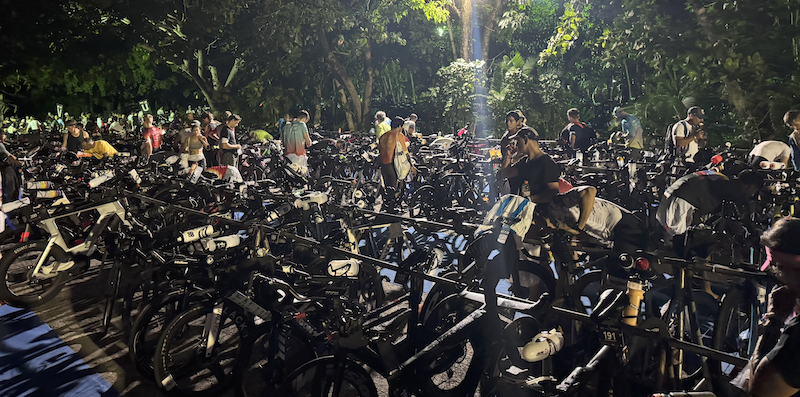
We arrived at transition before 5am, joining hundreds of other athletes waiting in the darkness for the area to open. I always enjoy the atmosphere on Ironman mornings. Everyone seems relatively calm, but there’s excitement in the air everywhere, with athletes checking tire pressures, preparing nutrition, and going through their final routines. After preparing my bike (filling bottles, getting the Garmin ready, waking up the pedals), I boarded one of the shuttle buses taking us three kilometers up the coast to the swim start.
There was still plenty of time to eat a banana, drink some Gatorade, apply sunscreen and Vaseline, and squeeze into my swim skin. Based on my previous performances, I seeded myself in the 1:10–1:20 swim corral. About 40 minutes after the professional athletes had started, I finally reached the pier. Every couple of seconds three athletes jumped into the water, and soon it was my turn.
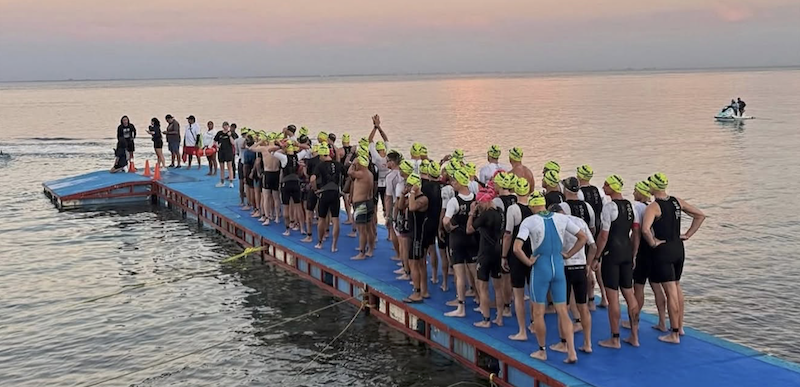
Swim: 58m32s
Conditions were excellent today. The ocean was relatively calm, the water temperature around 28°C, and the sun was slowly rising over the island. Cozumel’s swim course is straightforward, following the coast southward for approximately 3.5km before making a single turn toward the shore. With buoys placed roughly every 100 meters and incredibly clear water, navigation wasn’t much of a challenge.
During my previous two races here, the first 1,200 meters had been particularly difficult because of a strong current working against us. The same was true this year, although not quite as intense. My first 500 meters took about ten minutes, followed by another twelve minutes for the next 500. Last year, those sections took approximately fifteen minutes each, so things were already looking considerably better.
Then, as expected and hoped for, the current changed, and my splits became faster and faster: nine minutes, eight minutes, six minutes, and eventually less than six minutes per 500 meters. At one point I was swimming at a pace of just over a minute per 100m! Obviously not because I had suddenly become a much better swimmer; currents are weird! With the relatively shallow water, I could literally see myself flying over the ocean floor and the divers watching us from below at each buoy.
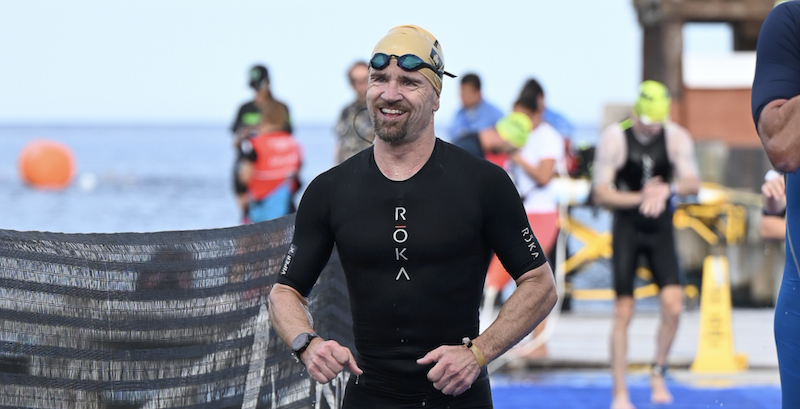
The swim was very enjoyable overall. Plenty of fish, coral, and other swimmers to look at, while the field had spread out nicely without much fighting for space. I did encounter a couple of jellyfish and got stung four or five times, but fortunately the pain was relatively mild and disappeared quickly. No breathing problems, no panic, no chafing, and before I knew it, I was approaching the exit.
I climbed out of the water after just 58 minutes and 32 seconds, considerably faster than expected. Certainly one of the advantages of swimming in Cozumel when the currents are in your favor!
T1: 11 minutes
After finding a chair in the busy transition tent, I went through my usual routine: cleaning and drying my feet, socks, shoes, sunscreen, helmet, gloves, sunglasses, and some Gatorade. I almost forgot to take off my swim skin, but luckily realized my mistake before leaving the tent. Then it was time for my favorite discipline.
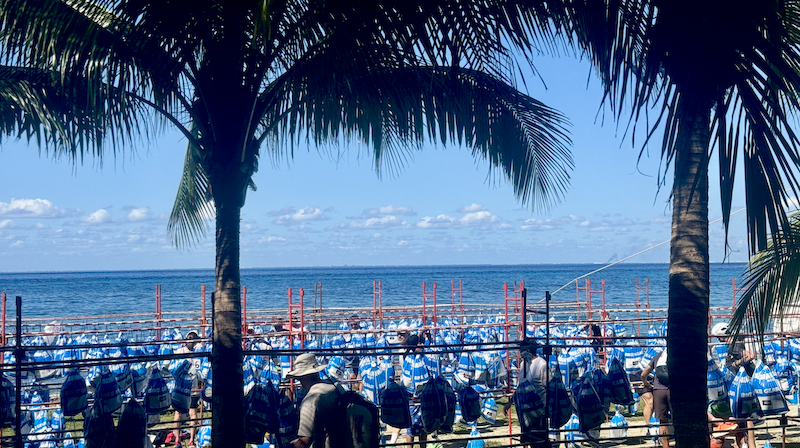
Bike: 5h02m
It’s no surprise that the first kilometers felt great. My tri-suit was still wet from the swim, and what often can be a discomforting issue, here it was providing some welcome cooling in the increasingly warm weather. I settled into my aero position and focused on following my pacing and nutrition plan: staying below 200 watts as much as possible, aiming for an average of around 180 watts, and drinking between 500 and 800ml per hour. I also carried a highly concentrated Tailwind mixture containing about 1,500 calories and 380 grams of carbohydrates, which I planned to consume gradually throughout the ride.
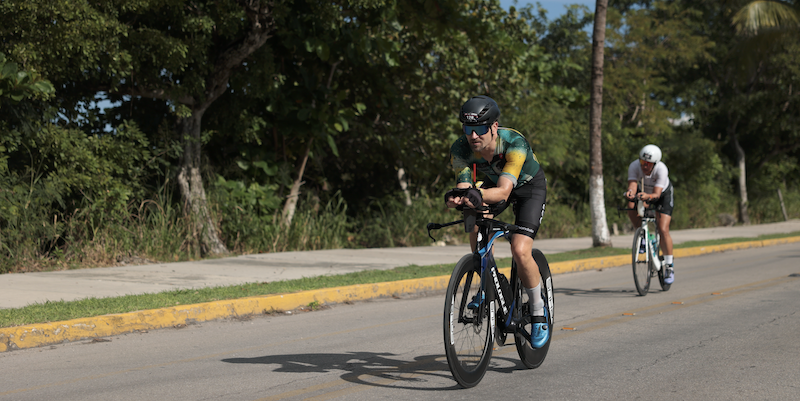
The first 20km were particularly enjoyable. With a favorable wind, I was cruising along at 38–40km/h without pushing too hard. Once the course reached the exposed areas at the eastern side of the island, the expected headwind picked up, but fortunately it wasn’t too bad yet. The sky was also becoming increasingly cloudy, providing some relief from the sun. After approximately another twenty kilometers of riding along the Caribbean coastline, the route turned west across the island, now with a tailwind again.
By the end of the first loop, I was averaging around 36.5km/h, considerably faster than in my previous two Cozumel races. The east-coast wind became stronger during the second loop, but still seemed more manageable than last year. I remember fighting (and cursing) quite a bit during that section. Maybe the conditions were better this time, or perhaps I was simply fitter after almost 20,000 kilometers of cycling this year.
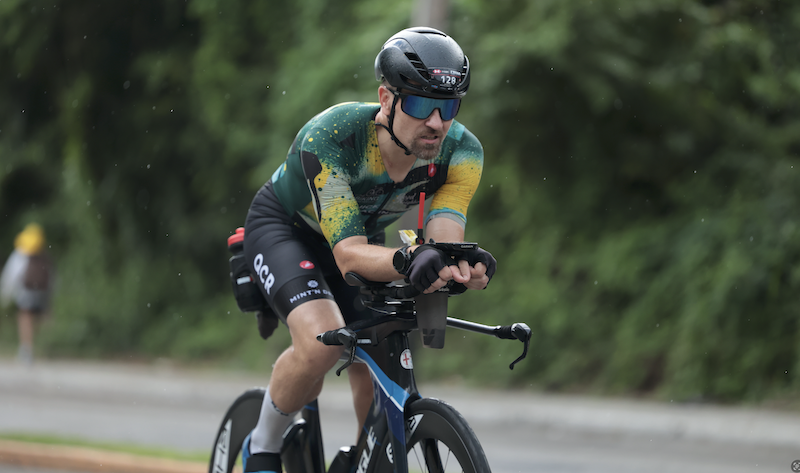
The course was getting increasingly crowded, and the apparent lack of drafting enforcement was somewhat frustrating. With almost 2,000 athletes on a three-loop course, it was inevitable that cyclists would end up close to one another, but this event is known of people blatantly drafting behind others for extended periods. I hardly encountered any referees, and the penalty tents always seemed empty when I passed them.
The aid stations were another room for improvement. A bit chaotic and seemingly understaffed, with volunteers struggling to prepare and hand out bottles quickly enough. I had to skip several stations because I couldn’t safely grab water, although fortunately there were enough of them that I never ran out of fluids (5 stations per loop is a lot).
During the third loop, my neck and legs were starting to hurt, but I was still maintaining my target power and consuming my nutrition as planned. Heavy rain showers moved across the island, which I actually appreciated. With the temperature remaining high, getting soaked provided some welcome cooling.
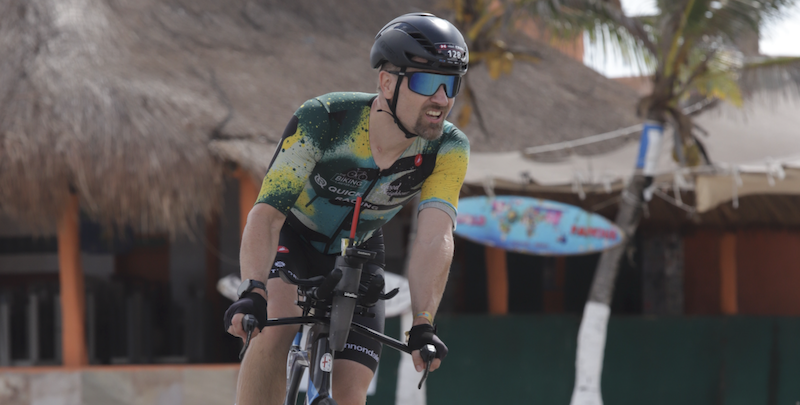
Towards the end I was getting seriously tired, though. A flat course never gives you a break, there’s no coasting, no standing up, all just one position peddling for hours. My legs hurt, my neck was stiff, and I started questioning whether I had pushed too hard. At the same time, I realized that I was getting surprisingly close to finishing the bike course in under five hours! Unfortunately, the route turned out to be about one kilometer longer than advertised, likely costing me that milestone.
Still, 5:02 was more than half an hour faster than both of my previous Cozumel bike splits. An excellent result, although I certainly didn’t feel like running a marathon now. Not at all.
T2: 12 minutes
I took my time in the second transition. My cycling shoes and socks were completely drenched from the rain, so I dried my feet, applied plenty of Vaseline, and changed into fresh socks. Applying sunscreen to wet and dirty skin wasn’t pleasant, either. After drinking half a bottle of Gatorade, I put on my running shoes and reluctantly headed out.
I was seriously doubting how this marathon would go. There’s something quite surreal about starting a 42km run after already completing six hours of endurance exercise, without any rest in between.
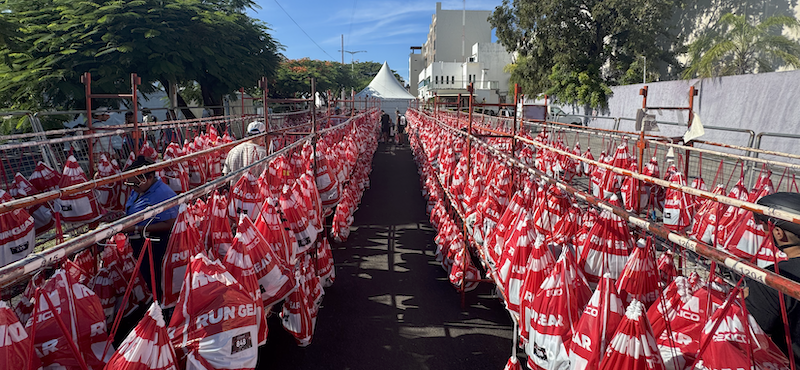
Run: 3h51m32s
Fortunately, the rain had stopped and the clouds remained, keeping the sun from burning down on the course. I deliberately avoided looking at my watch during the first few minutes, trying to assess how my body felt. To my surprise, everything seemed reasonably fine. My legs were tired, but there was no acute pain or stomach discomfort. During previous Ironman races, bloating and cramps had sometimes forced me to slow down almost immediately after leaving T2, so this was encouraging.
Then my watch announced the first kilometer split: 4:30min/km. Way too fast! I deliberately slowed down, but the second kilometer still came in at around 4:50. Certainly not sustainable for an entire marathon in my current condition, but it was reassuring to assume that I still had some energy left.
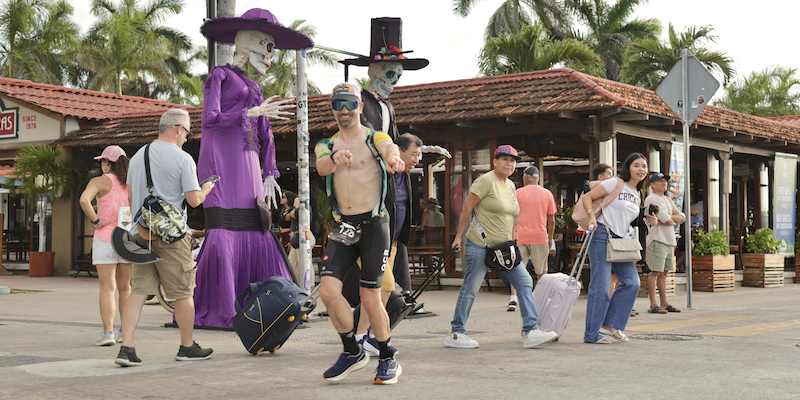
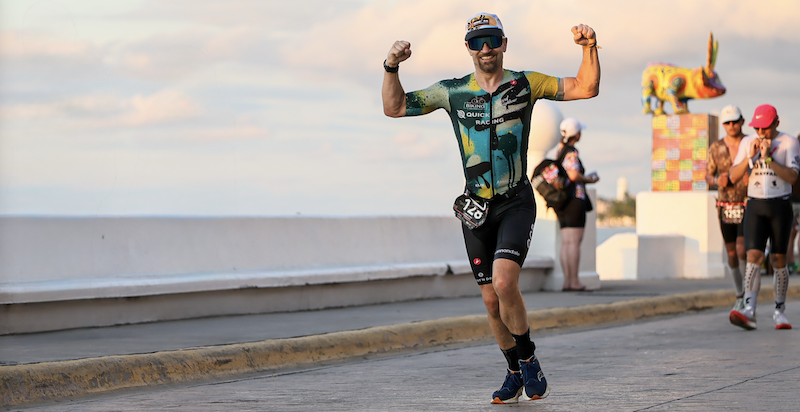
The running route consists of three 14km out-and-back loops, much of it following the coastline through town. It’s almost completely flat, apart from a couple of small inclines that somehow become bigger with every loop. The atmosphere is great, with plenty of spectators, music, restaurants, and people cheering along the route. Having so much activity around makes the kilometers go by much faster. Definitely one of the funnest run courses to do!
My nutrition strategy was simple: drink at almost every aid station, which were located roughly one kilometer apart, and alternate between water and Gatorade. I also planned to take a Precision gel approximately every 45 minutes until around kilometer 25, then switch to Coke for carbohydrates. I would walk briefly through the aid stations, allowing myself to drink properly while giving my legs a little break.
The first loop was difficult but manageable. When running, I was maintaining a pace around 5:10min/km, and despite the short walking breaks, things were going surprisingly well. I even experienced a little mental boost between kilometers 14 and 20, realizing that my stomach was cooperating and my legs were still moving at a decent pace.
But after the halfway point, the exhaustion really started catching up with me. Nothing was particularly wrong: no blisters, no chafing, no cramps, no sharp pain. My whole body was simply aching, and my brain increasingly suggested that stopping would be a much better idea than continuing. I knew the feeling from previous Ironman races, though, and had certainly experienced worse. Shut up legs!
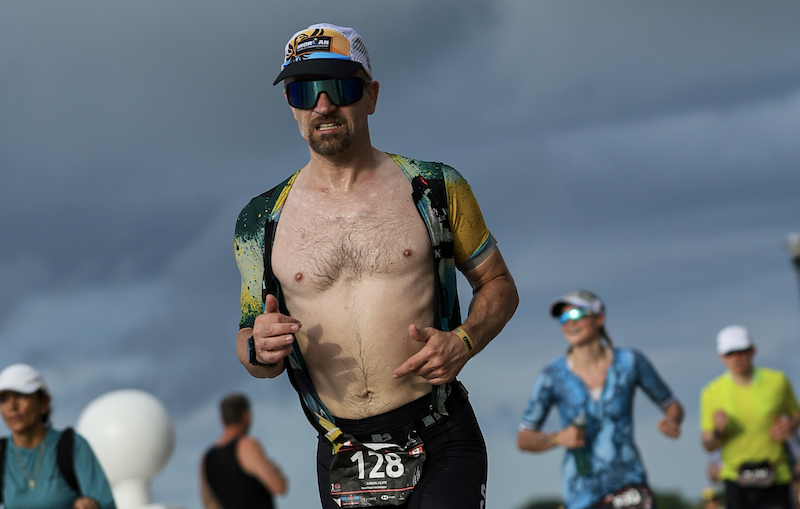
At this point the marathon became largely a mental challenge. Rather than thinking about the remaining twenty kilometers, I focused on reaching the next aid station. Run, walk for a few seconds, drink something, and start running again. Interestingly, my actual running pace remained fairly consistent at around 5:10min/km. The challenge wasn’t so much maintaining the speed, but convincing myself to resume running after every break.
Unfortunately, the aid stations were becoming more chaotic as the race progressed. In previous years, water was handed out in small sealed plastic pouches, but this year the organizers had switched to (much preferred) paper cups. That wouldn’t have been a problem if there had been enough volunteers to keep them filled. Instead, many stations were overwhelmed by athletes, while others were running out of gels. The volunteers were clearly doing their best, but the organization could have been better. Towards the end, the stations were almost comically chaotic, with everyone all over the place.
Starting the final 14km loop was mentally difficult, although I remained in reasonably good spirits. I knew I could finish, and despite feeling increasingly exhausted, my body was still cooperating. At this point I usually start calculating: “Even if I just started walking now, I’d still finish under X hours. So I might just try to run at least a little more…” The last seven kilometers became exceptionally challenging, requiring quite a bit of willpower to keep moving. But I stuck to my routine, continued hydrating, and kept running between the aid stations. Having completed so many marathons before, I also knew that it’s never over until it’s over; even during the final kilometers, things can still go wrong, so I just focussed on one aid station at a time.
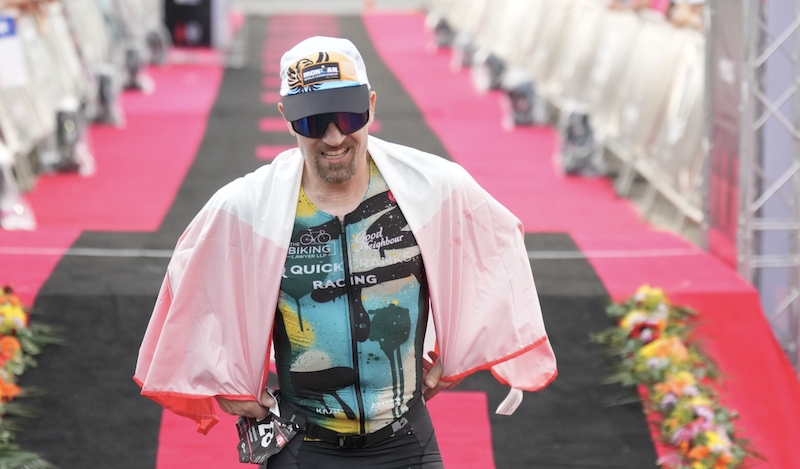
Eventually, the finish line came into sight. Someone handed me my Canadian flag as I approached the finish chute, and there I was, completing my ninth full Ironman! That feeling just never gets old. This is why we do it.
A new personal best!
When I stopped my Garmin at the finish line, it showed an overall time of around 10 hours and 15 minutes. I didn’t believe it. My watch had been acting strangely throughout the marathon, refusing to record my heart rate properly and displaying what seemed like an incorrect running time. Based on how exhausted I felt, I was convinced I had finished much closer to eleven hours, and I was happy about that, too.
But the official result confirmed it: 10:15:25!
Not only had I beaten my previous Cozumel performances by a considerable margin, but I had also improved my full Ironman personal best by 13 minutes compared to Ironman Ottawa in 2025. Something I certainly hadn’t expected going into this race!
Looking back, several things came together remarkably well. The ocean current helped big time during the swim, the wind on the bike seemed somewhat less brutal than in previous years, and the clouds and rain provided relief from the tropical sun. Needless to say that my training probably played an equally important role. After an exceptionally strong cycling season, some solid running months, and more swimming than usual, I was in very good shape.
Perhaps most importantly, my pacing and nutrition worked out. Despite feeling exhausted after the bike, I was able to run the entire marathon without the stomach problems that had caused trouble previously. I never really hit the wall, and my running pace remained surprisingly stable until the finish.
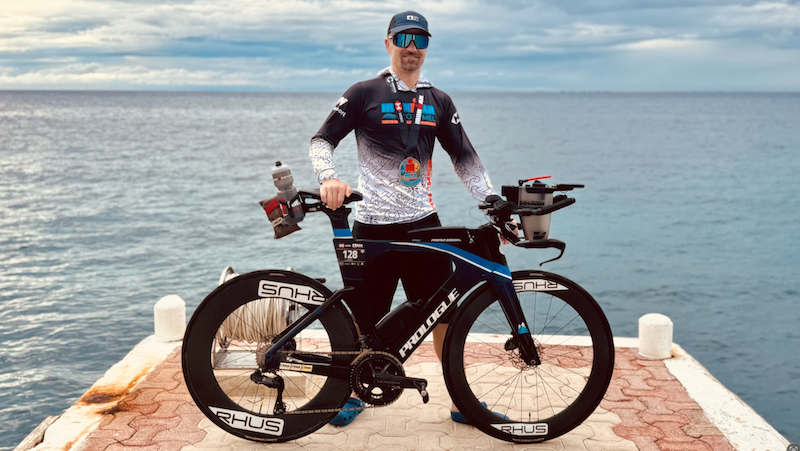
Ironman Cozumel continues to be one of my favorite race destinations. The island is beautiful, the ocean swim is spectacular, the bike route offers incredible views, and the atmosphere during the marathon is fantastic. There are certainly improvements to be made, particularly regarding drafting enforcement and aid station organization, but overall it’s a great event and I will be coming back.
After three finishes at this event, I managed to come away with a new personal best, without even realizing it in that moment.
Aftermath
What’s great about this race:
- All aspects of the course itself: likely the best Ironman swim you’ll ever get (and I’ve done a couple of ocean swims already), a beautiful and super flat bike ride, and party atmosphere on the run
- The atmosphere during race week is amazing. Seeing everyone arrive and doing their final training is inspiring and really gets you into competition mode
What’s specific to this course:
- Split transition with point-to-point swim: logistics maybe confusing especially for first-timers
- Even though it’s flat, it’s a rather hard course, mostly due to weather conditions. Very warm, very humid, and very windy
- The swim is known to be fast and easy, but it’s still an ocean swim. It can be choppy, the currents can change, jellyfish can be irritating, salt water can irritate your stomach. If you want to race here, come early enough to practice your open water swim
- It’s a tropical island – it will be warm, but it can be wet! And since your transition bags will be stored outside overnight, make sure you double-bag everything you’d like to stay dry (shoes, socks,…)
- Think about waxing your chain before coming here. Torrential downpours can happen, and the salty air is also not your chain’s best friend
What I wish would improve:
- With such a crowded bike course, a more consequential drafting rule enforcement would really be appreciated
- Aid stations at both the bike and run course were understaffed, quite chaotic, and some ran out of nutrition
Speaking about nutrition…
I created my nutrition strategy just a couple days before. With the humidity I needed to make sure to take in enough fluids and electrolytes, while aiming for 70-80 carbs per hour on the bike, less on the run.
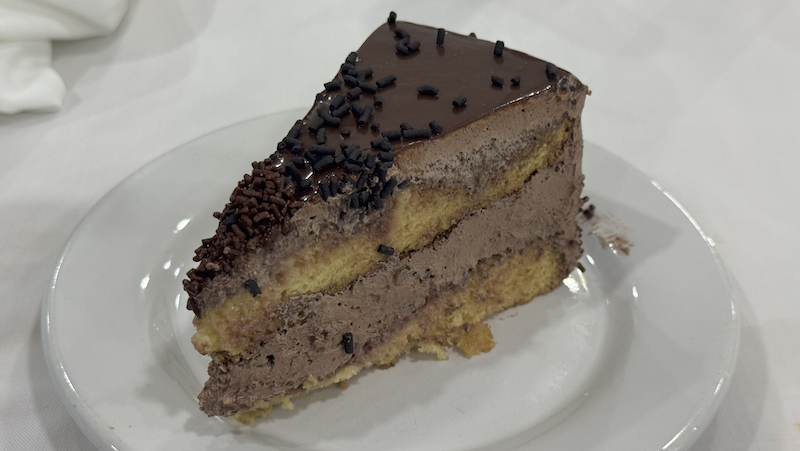
- Breakfast: 2 muffins, 1 toast with Nutella, 1 coffee, 1 banana, 500ml water
(~100g carbs, 700cal, 750ml fluids) - Pre-swim: 1 banana, 500ml Gatorade
(~55g carbs, 240cal, 500ml fluids, 250mg sodium) - T1: 500ml Gatorade
(~30g carbs, 120cal, 500ml fluids, 250mg sodium) - On the bike: 15 scoops of Tailwind, 1 Clif Blok, 700 hydration system refilled every hour
(~420g carbs, 1680cal, 5300ml fluids, 4900mg sodium) - On the run: 500ml bottled Gatorade, 4 Precision gels, cups of Gatorade, Pepsi, and water at almost each water station
(~340g carbs, 1300cal, 2700ml fluids 870mg sodium)
Total during the race, including pre-swim nutrition: 845g carbs (3340cal), 9000ml fluids, 6270mg sodium. That breaks down to an hourly total of roughly:
- 85g carbs
- 900ml of fluids
- 600mg of sodium
Sodium was probably at the lower end for the conditions, but I did not bring any of my own fuel. Getting enough sodium without taking in too many fluids or sugar at once ain’t easy with what was offered on course. 85g carbs per hour in average is pretty good, and especially during the bike ride I think I could absorb more.