Back to trip overview | Part I | Part II | Part III | Part IV | Part V | Part VI
Bikepacking in Germany: What to expect
Long-distance cycling in Germany is very easy and a lot of fun. If you’re planning to go bikepacking in Germany yourself, here are some general impressions and tips – keep in mind that this is written from the point of view of someone who has lived and cycled in Canada for many years.
Well established cycling network
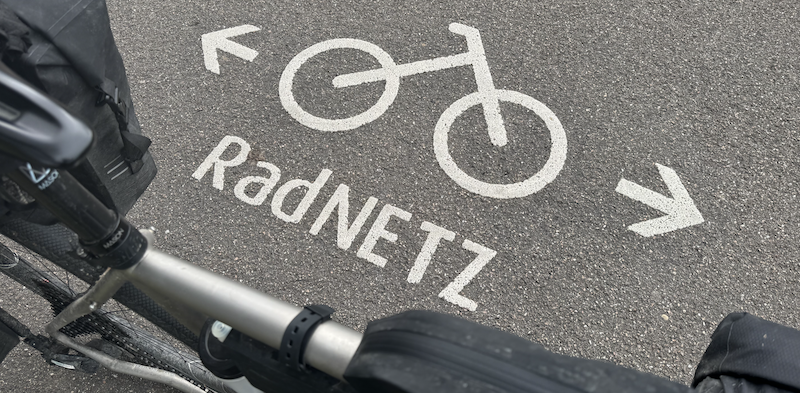
You’ll find bike paths everywhere. There not always in the best conditions, and sometimes they abruptly end, or continue on the opposite side of the road, but generally you’ll feel taken care of as a cyclist. We almost never found ourselves having to ride on a very busy road – there was either an easy to find alternative route on very calm side roads, or the busy roads had protected bike lanes in good conditions. And there are countless of local bike paths through fields and forests, which are very well signposted.
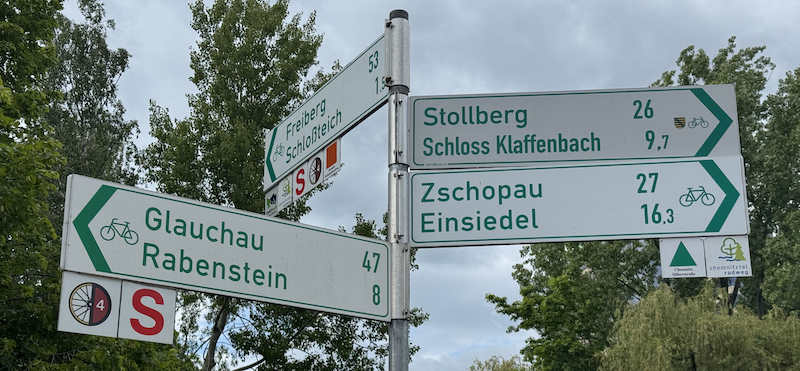
Consider checking out the EuroVelo routes, too: a cycling network spanning across Europe and consisting of 20 long distance journeys, many of which pass through Germany. (https://en.eurovelo.com/germany)
Good road conditions
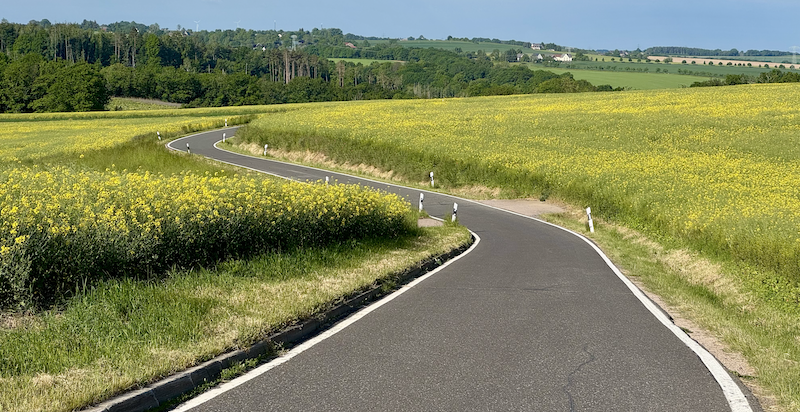
While a lot of city centers and older towns feature cobblestone roads, you’ll mostly encounter comfortable surfaces on German streets – especially if you’re used to countries where asphalt conditions often are very questionable (like myself, living in Ontario/Canada). We came across so many perfectly smooth tarmac on traffic-free roads, it was quite enjoyable.
Considerate drivers
Germany is known for its roads without speed limits, but that only applies to some sections of the Autobahn, on which bicycles are not allowed anyway. And yet, German speed limits are often above what you may be used to – in between cities, drivers are generally allowed to go 100km/h, even on roads that are rather narrow. On top of that, and especially if you’re from North America, you will notice that even the busier streets almost never have a shoulder to ride on.
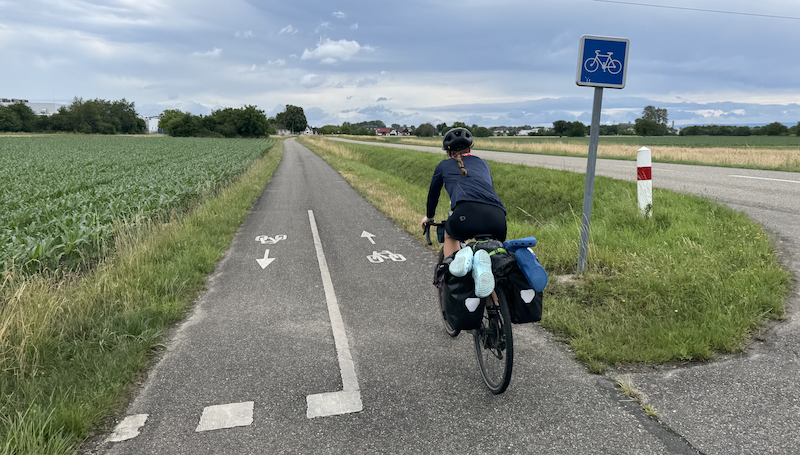
Cycling still feels so much safer than in North America:
- Cars are much smaller; you hardly see any of those dangerously heavy pick-up trucks.
- Drivers are more used to sharing the road with cyclists and therefore often slow down and give you the space you need.
- Busy roads with fast traffic very often come with separated bike paths.
- Large road network, that makes it easy to find calm alternatives to the main traffic arteries.
Bakeries and grocery stores
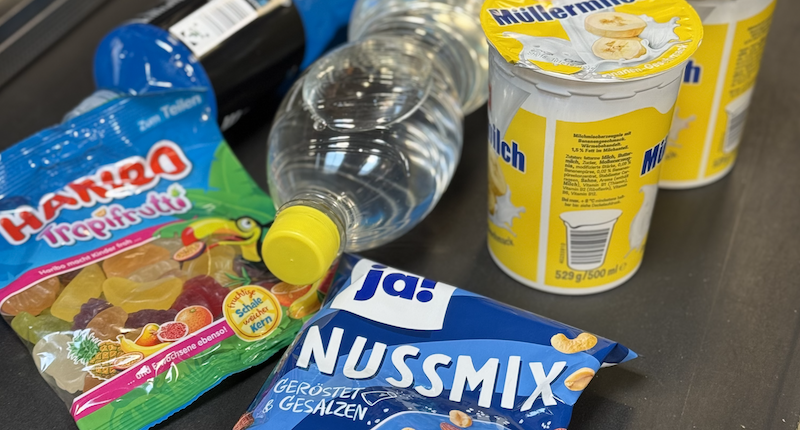
We found it so incredibly easy to stay hydrated and refuel! Every little village comes with at least one bakery and most likely a well-equipped grocery store. And the distance between villages is never larger than an hour of cycling, often much less than that. We never had to worry about running out of water or food, and quickly found our favorite snacks that we could reliably source on multiple stops each day: banana milk, Haribo Tropifrutti, cake, and coffee.
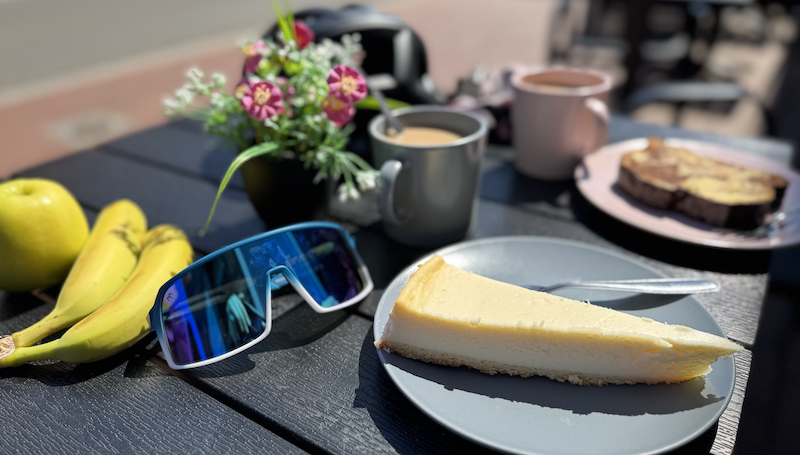
The only two caveats:
- On Sundays, most businesses are closed. Exceptions are gas stations and restaurants, and often bakeries during the morning hours.
- The size of coffee cups is surprisingly small, and there are no free refills anywhere.
Language barriers?
Generally, it is possible to get along in Germany speaking English only. In bigger towns and among younger people it is definitely not an issue – you’ll find that folks will try their best to communicate with you in English. It gets a bit more complicated in smaller towns and villages, but if you’re not shy and have some patience, you’ll work it out. It doesn’t hurt to learn some basic phrases, which will be appreciated by the locals.
Cash is king
For some reason, many Germans are skeptical when it comes to using credit cards. Many businesses, especially the small ones, will not accept your VISA or AmEx card, some won’t even accept foreign debit cards, some would only accept cash. There are plenty of ATMs to withdraw money, so make sure that your credit card doesn’t charge too many fees.
Consider using public transit
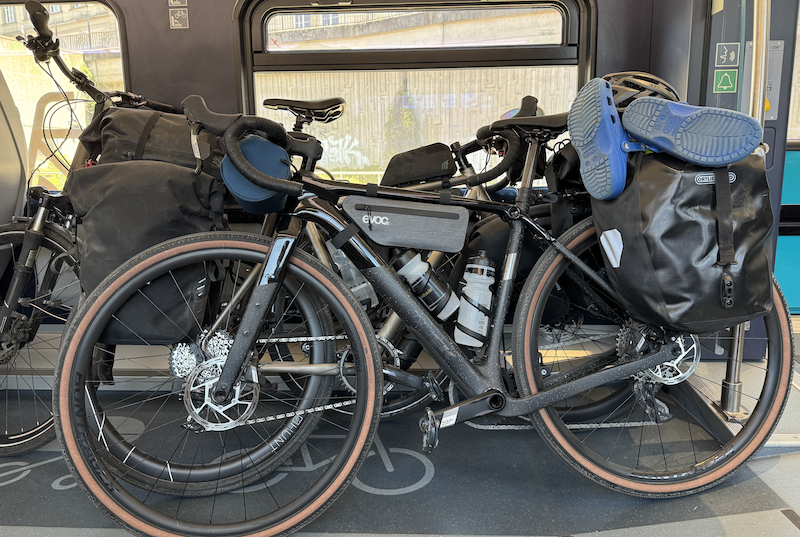
The train network and public transit in Germany may not be the most punctual, but it is very well established compared to many other countries’ standards. And taking a bicycle on the train is no big deal at all; most train have dedicated areas for bicycles, and even on most of the high-speed long distance trains (ICE) biker acks are available (but you have to reserve your spot upfront).
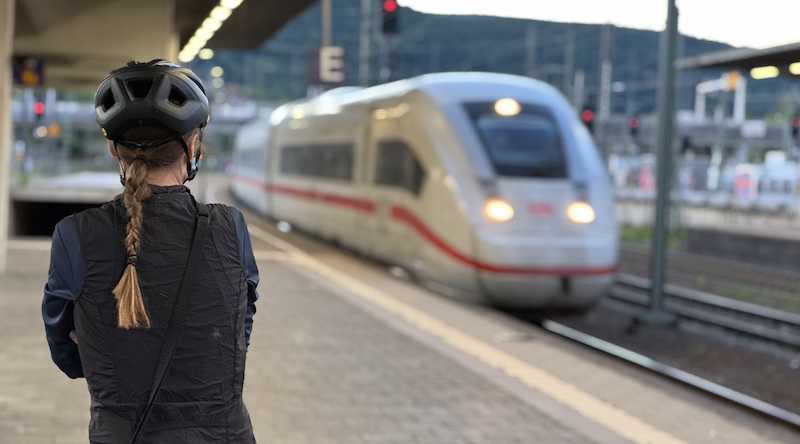
Taking a train is a great way to cover some distance while still being able to enjoy the surroundings. Connections are frequent, even though not always cheap. If you’re planning to stay in Germany for more than just a week or two, consider buying the Deutschland-Ticket: a monthly fare that allows you to use each and every local and regional bus, tram, or train for 58 Euros (as of December 2025).
Accommodations
While camping in Germany is absolutely possible and unproblematic, we decided to stay in B&Bs and small hotels. We mostly just booked 2-3 days in advance, and never had an issue finding a nice place to sleep. In a densely populated country there’s always an overnight stay relatively closeby. We were mainly using booking.com and AirBnB to find something.