
Back to trip overview | Part I | Part II | Part III | Part IV | Part V | Part VI
From Füssen to Heidelberg
548 kilometers | 4 days
Westwards along the Alps
Leaving that Austrian farmhouse after a beautiful local exploration day wasn’t easy. We had a great time there and decided to come back very soon, for a longer stay and more exploration. The weather was on our side again, though, and we were looking forward to keeping cycling along the Alps going westward, crossing the German region called Allgäu. Rolling hills, open area, alpine mountains as a backdrop, plenty of cows, small farms and towns every couple of kilometers.
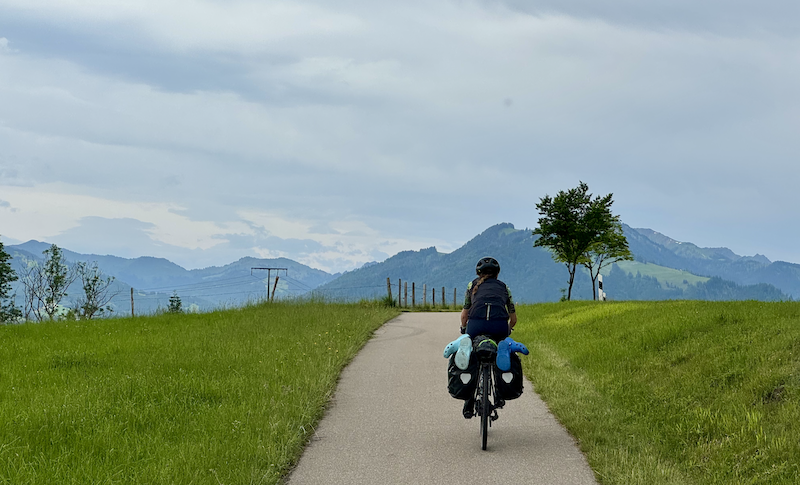
After 100 kilometers we reached Germany’s largest lake, the Bodensee (Lake Constance). Supposedly, there’s a cycling route around the lake, and we’d be taking part of it to cut across our east-west passage through the country. The Lake Constance section turned out being somewhat disappointing, though: the roads got larger and busier, and there was not too much to see of the lake itself. Most of its shoreline seemed to be private property, not allowing too many good views.
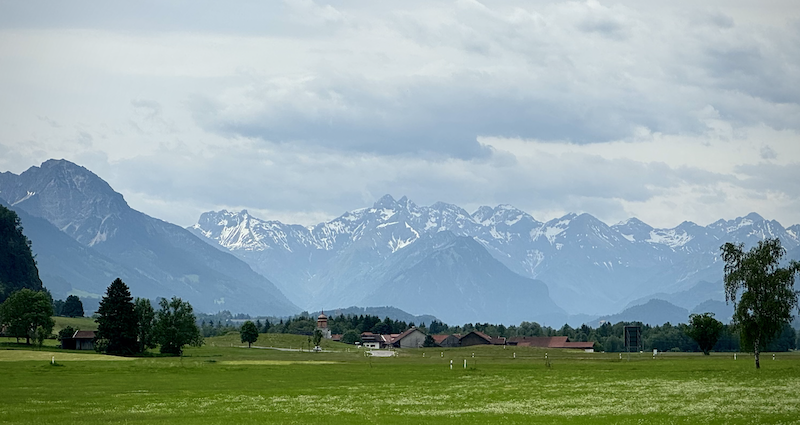
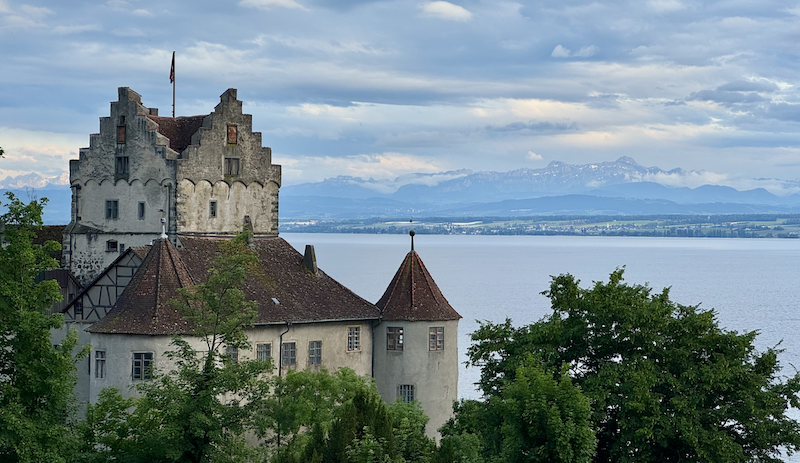
Small towns we passed along the way (like Immenstadt, Lindau, or Friedrichshafen) were quite picturesque and welcome places to stop for some coffee and cake or other local snacks. Especially Meersburg, where we arrived at our B&B after 150km and just in time before a heavy rainstorm.
Crossing the Black Forest
In some ways, Germany seems so small! It took less than a day to leave Lake Constance and one of the rare flat sections of this trip behind, just before entering the next mountain region: the Black Forest! Unexpectedly, that was some serious cycling business. Long climbs, going back up to over 1000m of elevation, steep downhills, and quite a bit of gravel riding, too. With the landscape the architecture changed noticeably, too, compared to what we saw in the Allgäu just the day before.
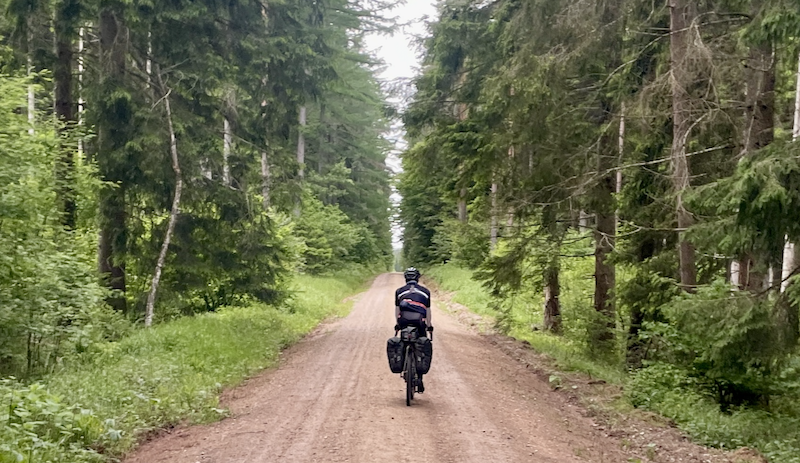
We had booked another small farmhouse B&B in the heart of the Black Forest, not too far from Freiburg, surrounded by mountains, farm animals, and fresh air.
Breisgau Village and Vosges Mountains
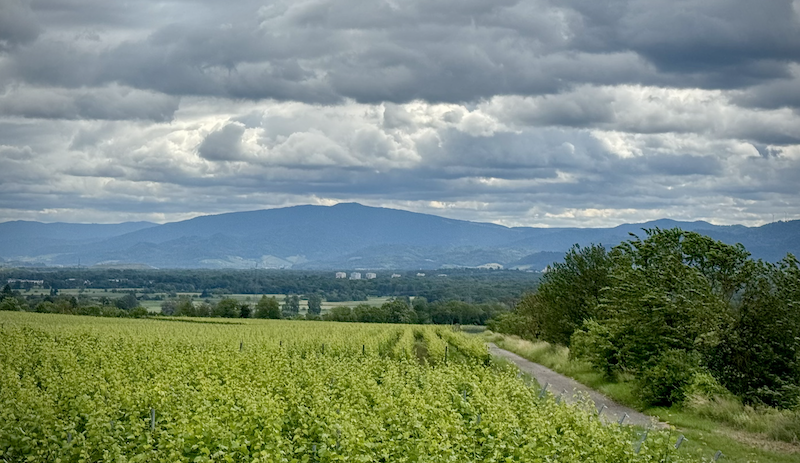
Our second to last day on the bikes got us through yet another two European regions. First, we passed through Freiburg, the center of Germany’s Breisgau Village, usually one of the sunniest and warmest regions of my home country. Not on this day, though. Clouds, cool temperatures and headwind made crossing this picturesque landscape quite exhausting.
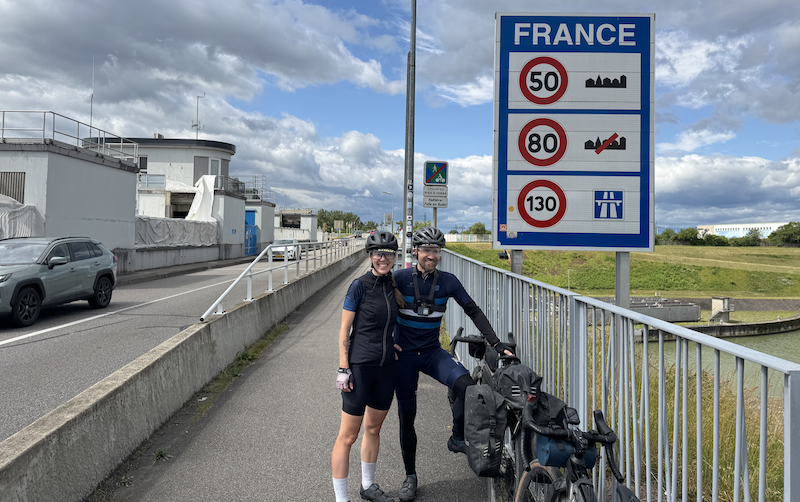
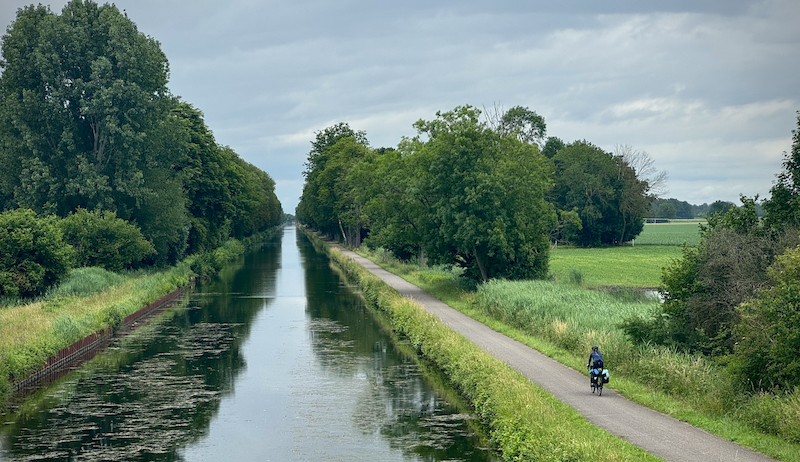
Once we crosse the border to France and turned North along the Vosges Mountains, the wind was on our tails again, making it for an overall smooth ride. Much of which along calm paths along old canals, reminding us of last year’s trip that followed the Empire State Trail through New York.
Low hanging dark clouds and rain on the horizons of all four directions got us a bit nervous, and soon enough we were caught in some heavy downpours. Being wet and cold we decided not to stop in Strasbourg, and instead kept pedaling towards our last hotel.
Finale!
123 kilometers to go on our final day – still cool temperatures for early June, but a welcome tailwind and arguably one of the flattest routes of the trip. Basically, following the Rhine River for the entire day.
It felt somewhat surreal knowing that we’d end a three weeks adventure already, having covered such a long distance, so many landscapes, and countless memories. Cycling is a slow way of travelling, and yet it feels like you’re coming such a long way in a relatively short time.
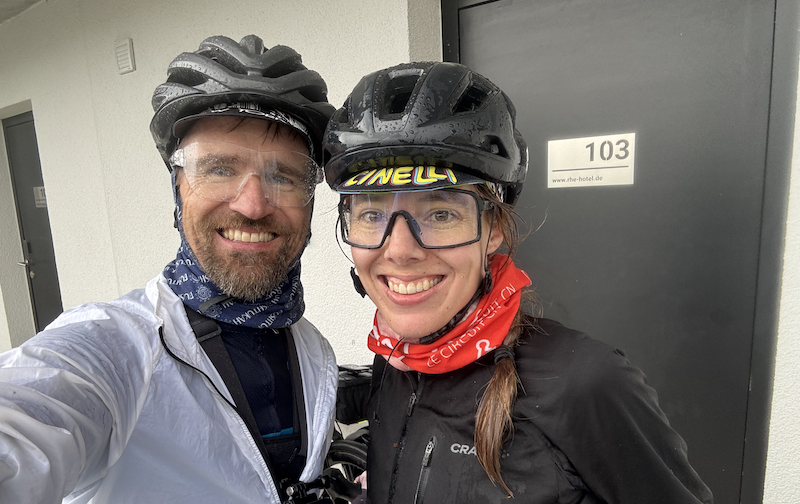
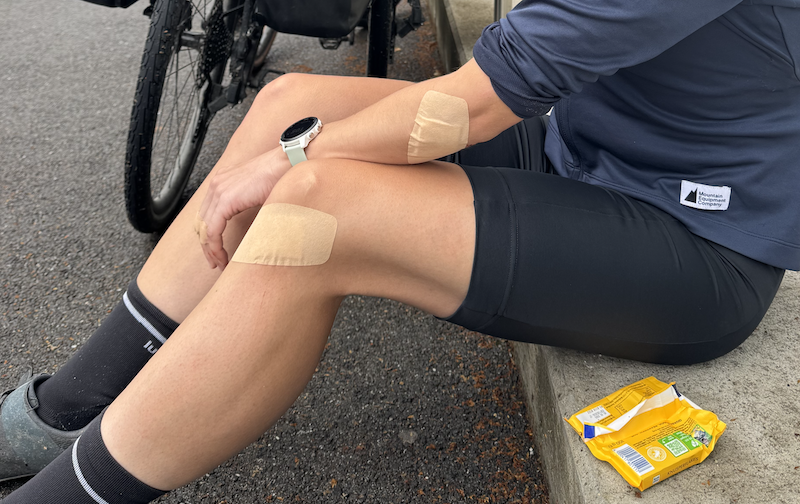
And while we spent so much time in our saddles without any accident, it was today when we had our first collision: crossing a rail track, my unpredictable swerving to the left caused Tara to touch my rear wheel, ultimately letting her lose control of her own bike and fall. Avoidable and unnecessary, but luckily no major injuries occurred; road rash on knees and hips and elbows is painful, yet easy to treat on the go. It wasn’t too far to the next pharmacy, where we got supplies to clean and bandage the wounds before continuing.
The closer we got to Schwetzingen, the more familiar everything looked. I spent most of my early professional life in this area back in the 2010s, and to some extent it felt like returning home after a long trip. A welcome tailwind pushed us northeastwards, and we made it to a cozy sheltered beergarden just in time before another downpoor at our final destination.
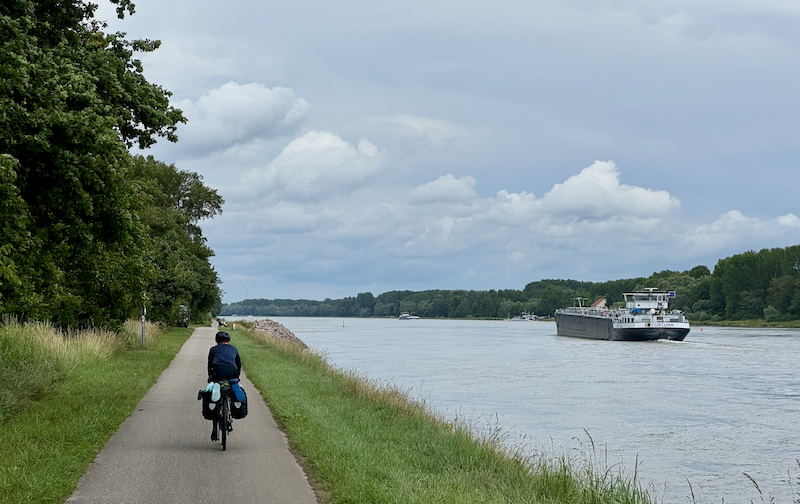
After 2300 kilometers on the bike, a complete north-south-east-west crossing of Germany, Tara and I finished our second long bikepacking adventure together!
12: Füssen to Meersburg
13: Meersburg to Freiburg
14: Freiburg to Rheinau
15: Rheinau to Schwetzingen
Back to top | Previous page: Part IV | Next page: Part VI: Bikepacking in Germany